
Daf 32 Daffodil de Luxe
Save this Daf
With a free account you can keep an eye on it:
- notification of a price change or sale
- pre-market: see new cars before anyone else
- bid in the live auctions
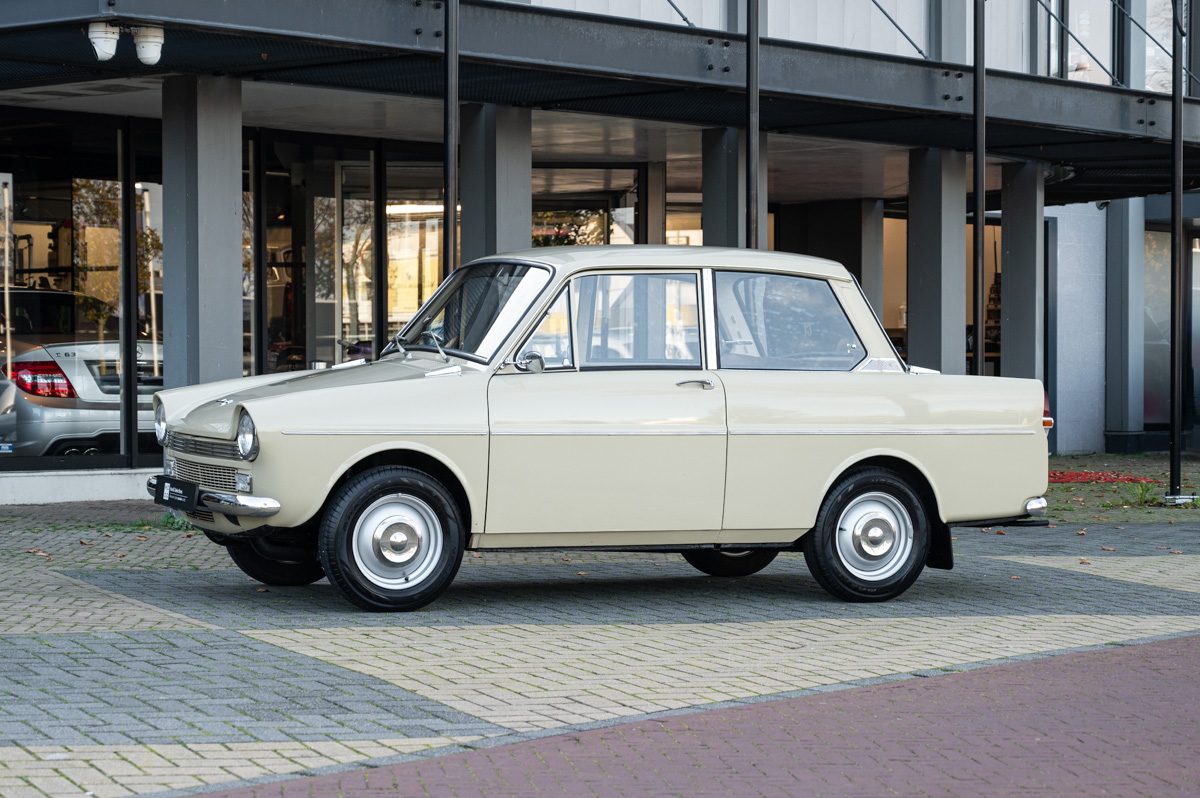
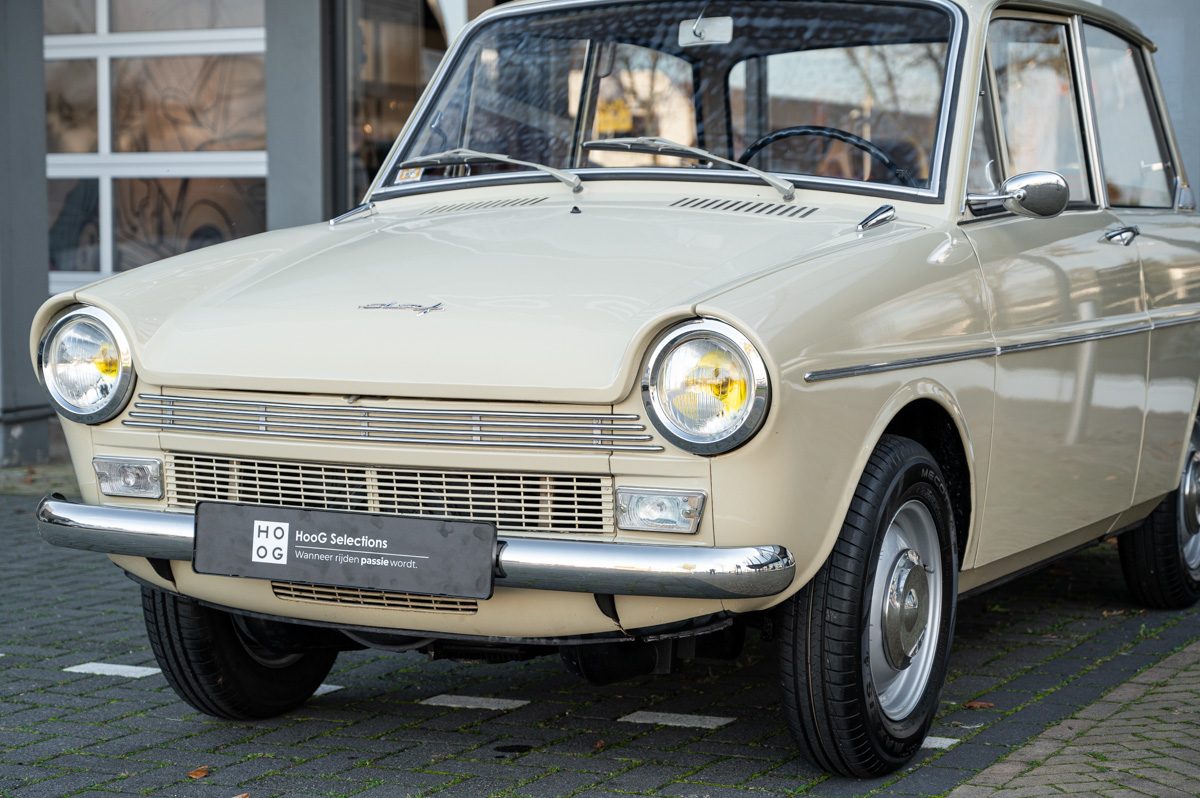
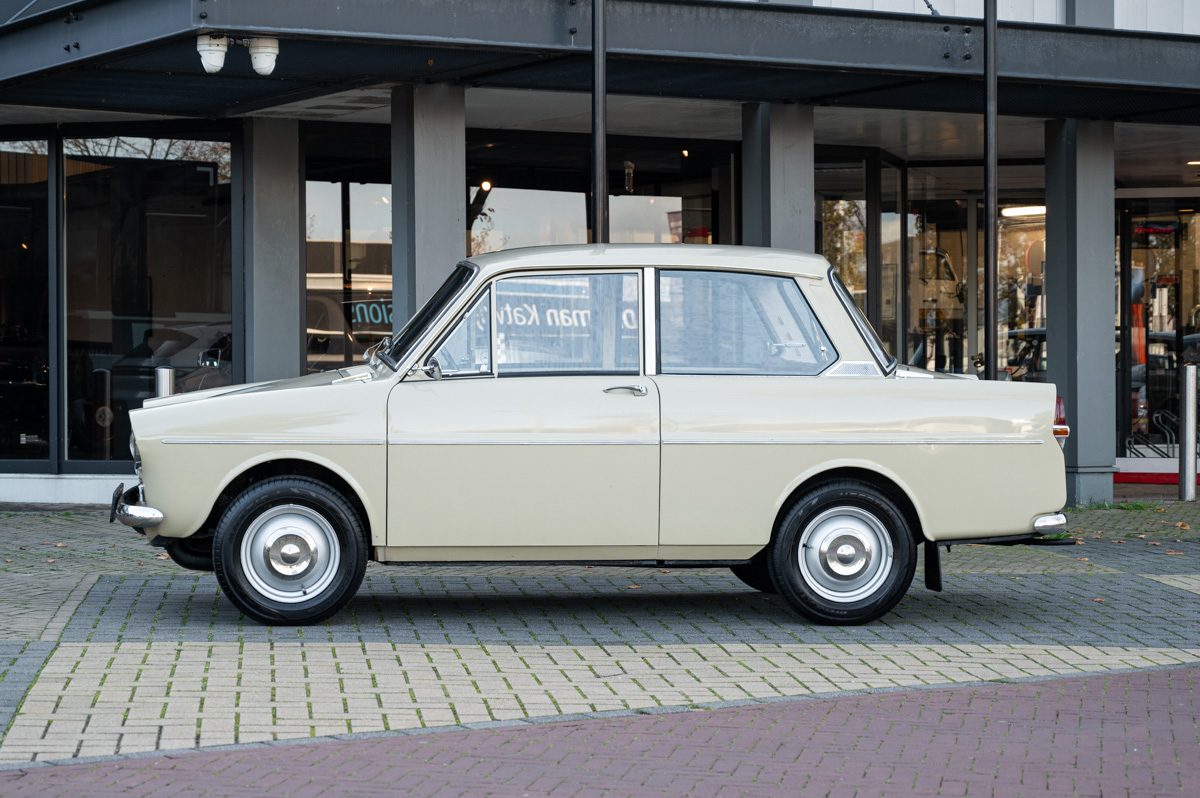
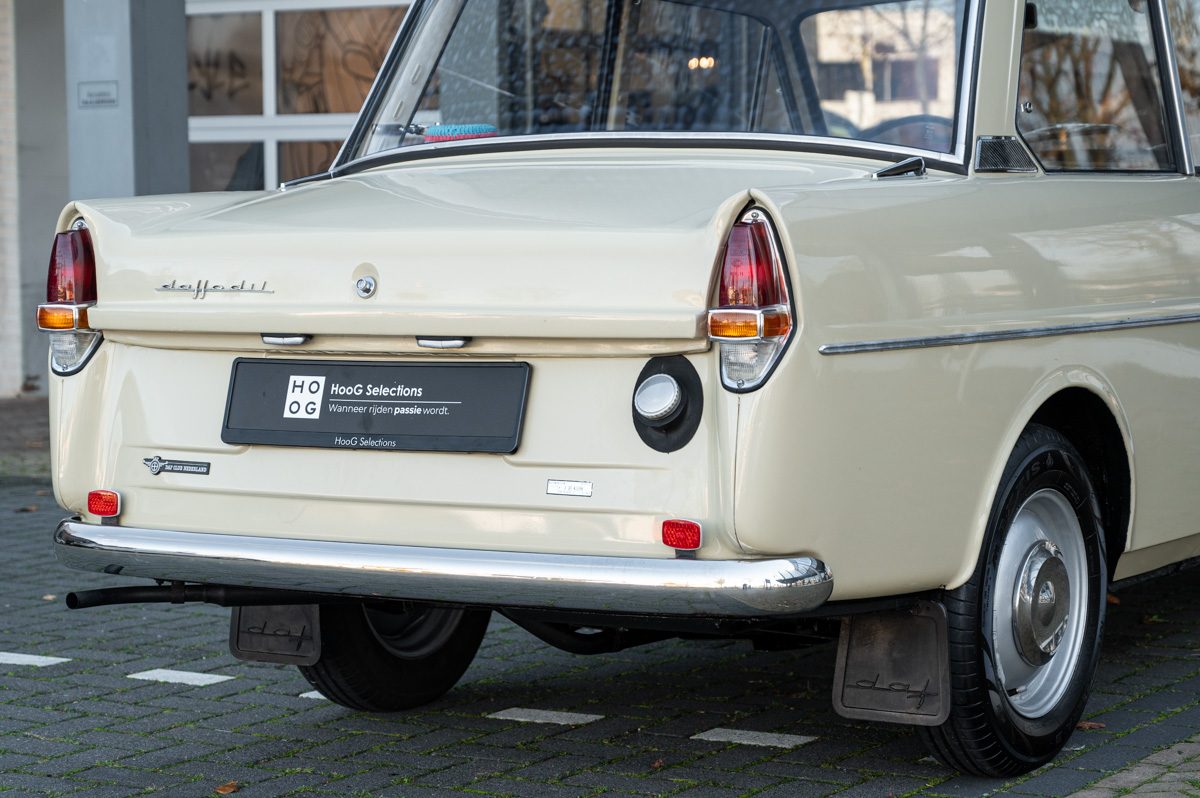
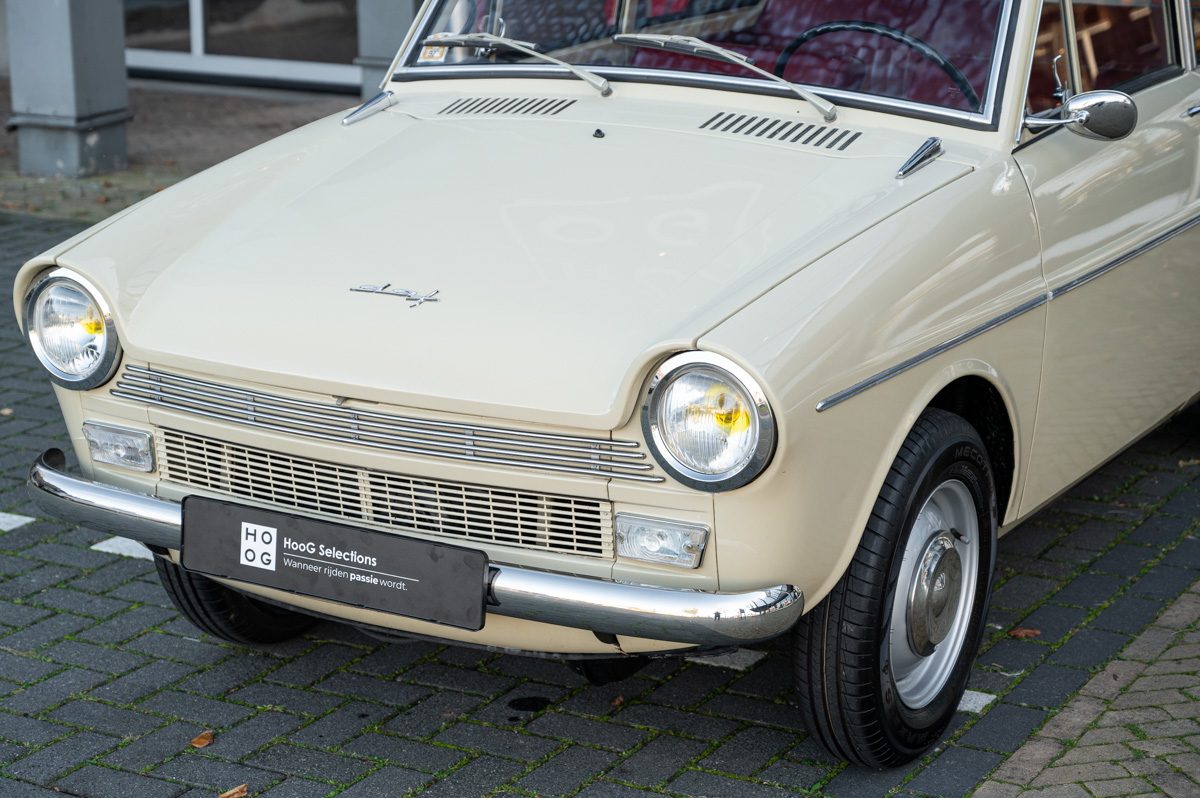
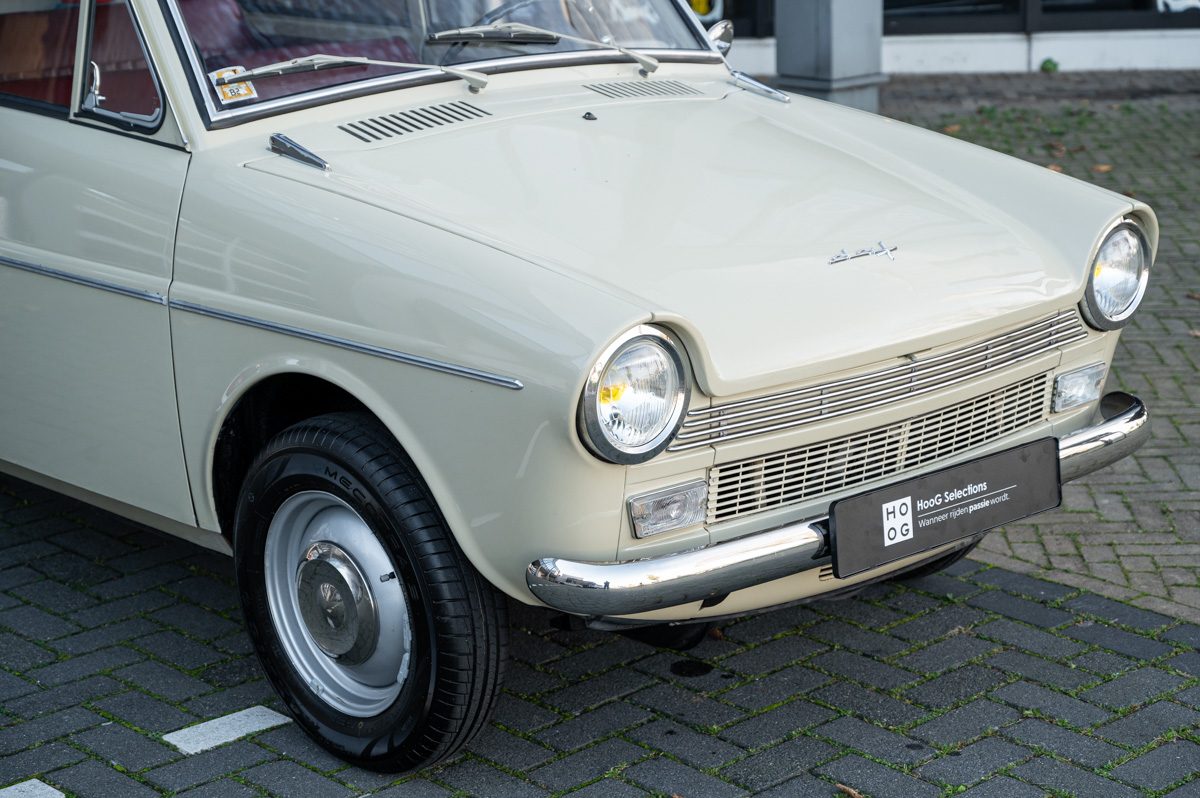
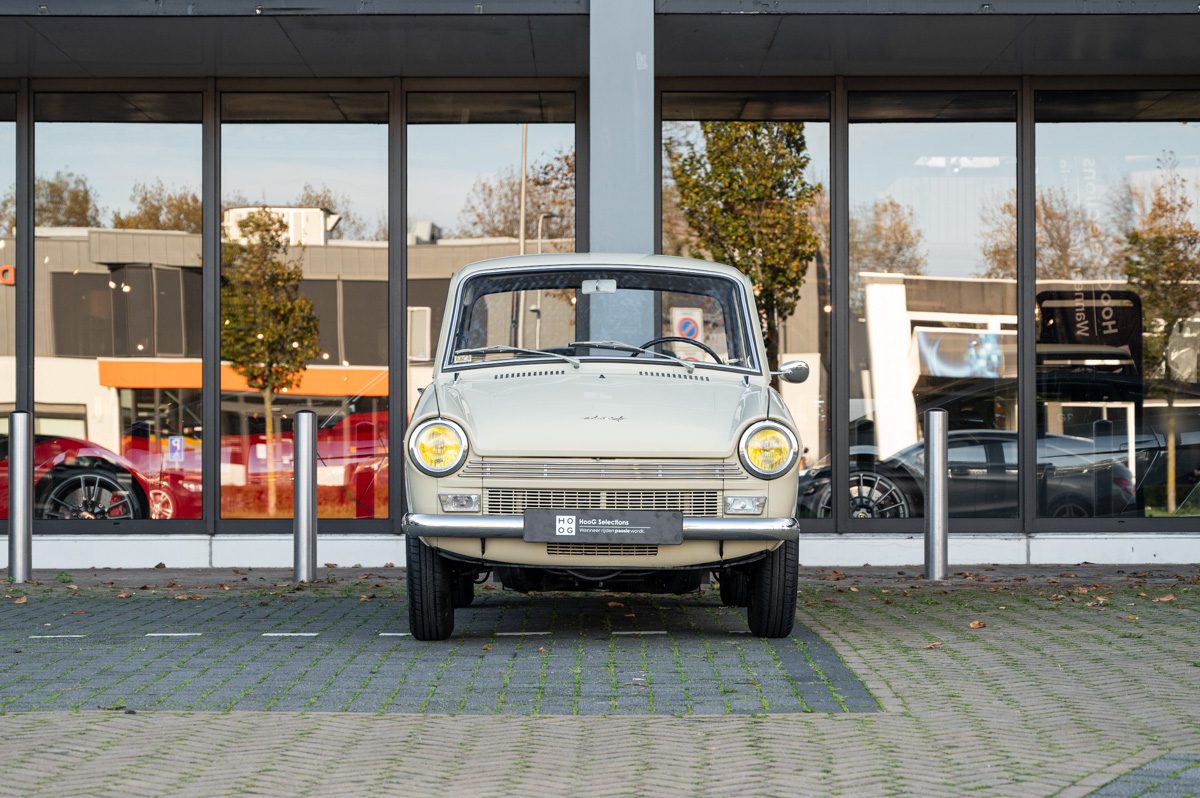
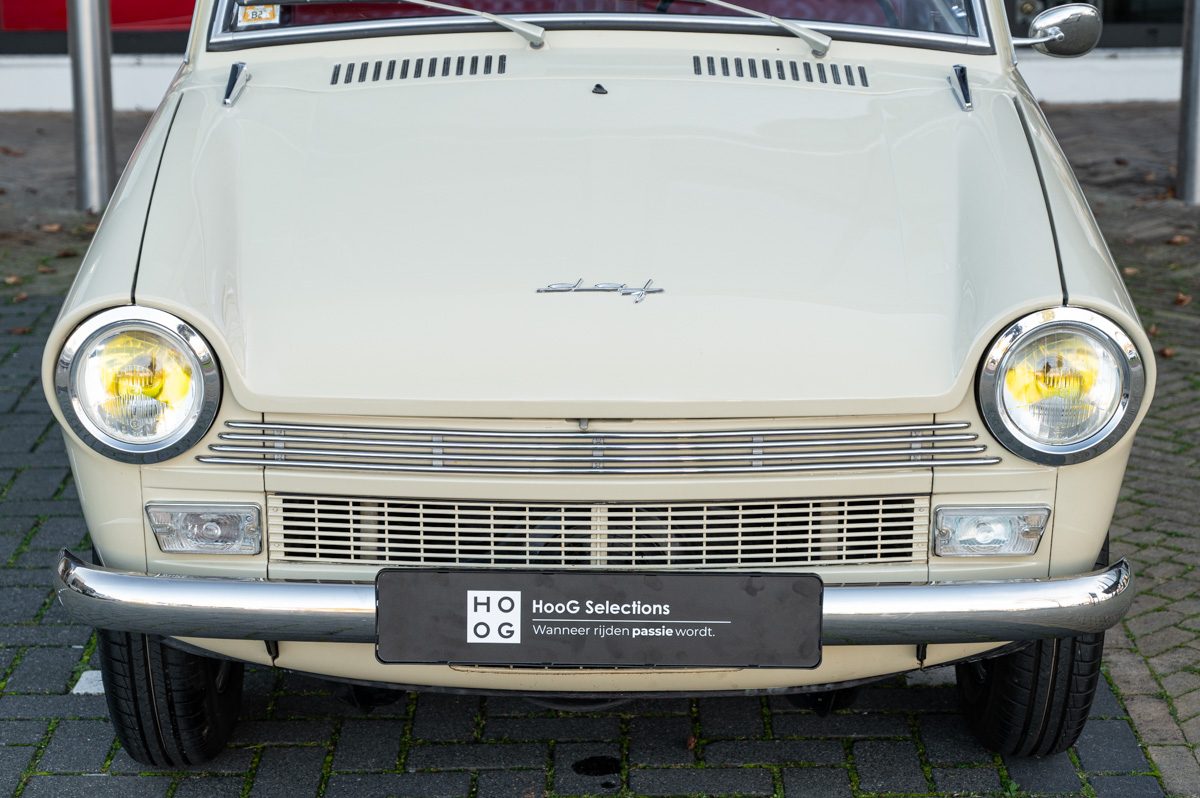
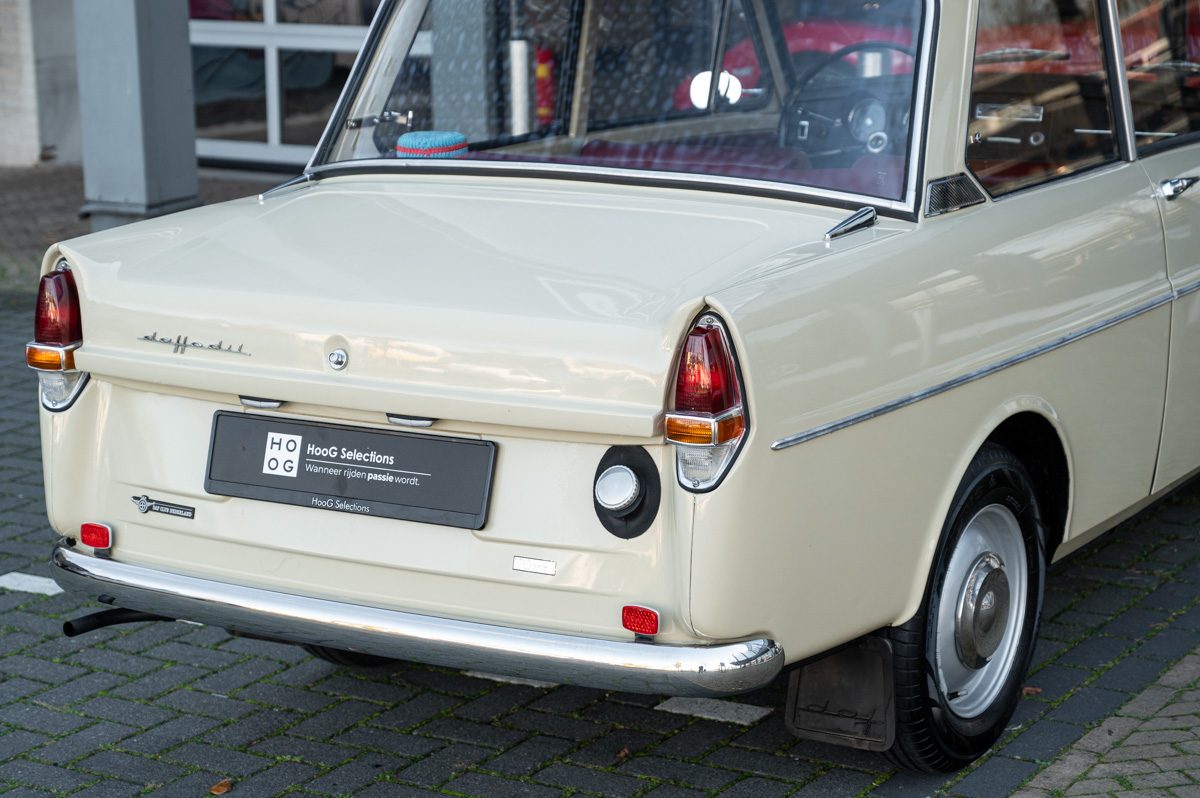
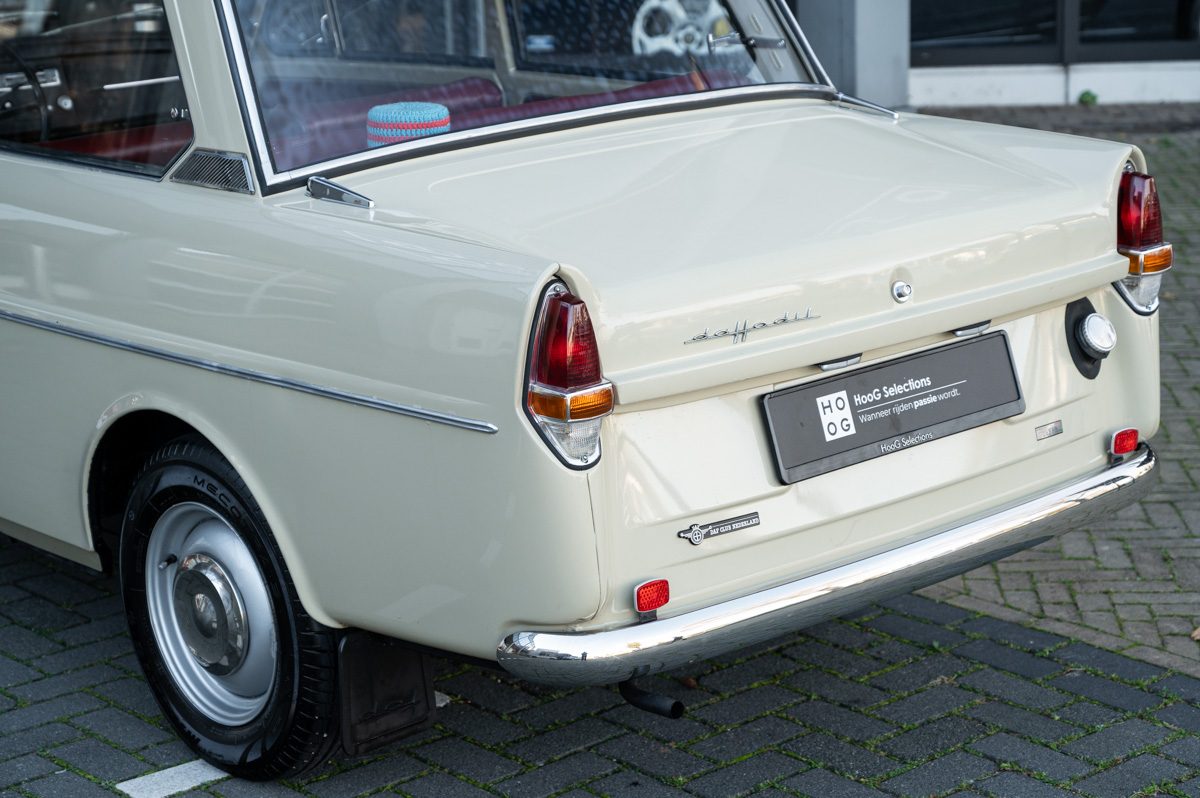
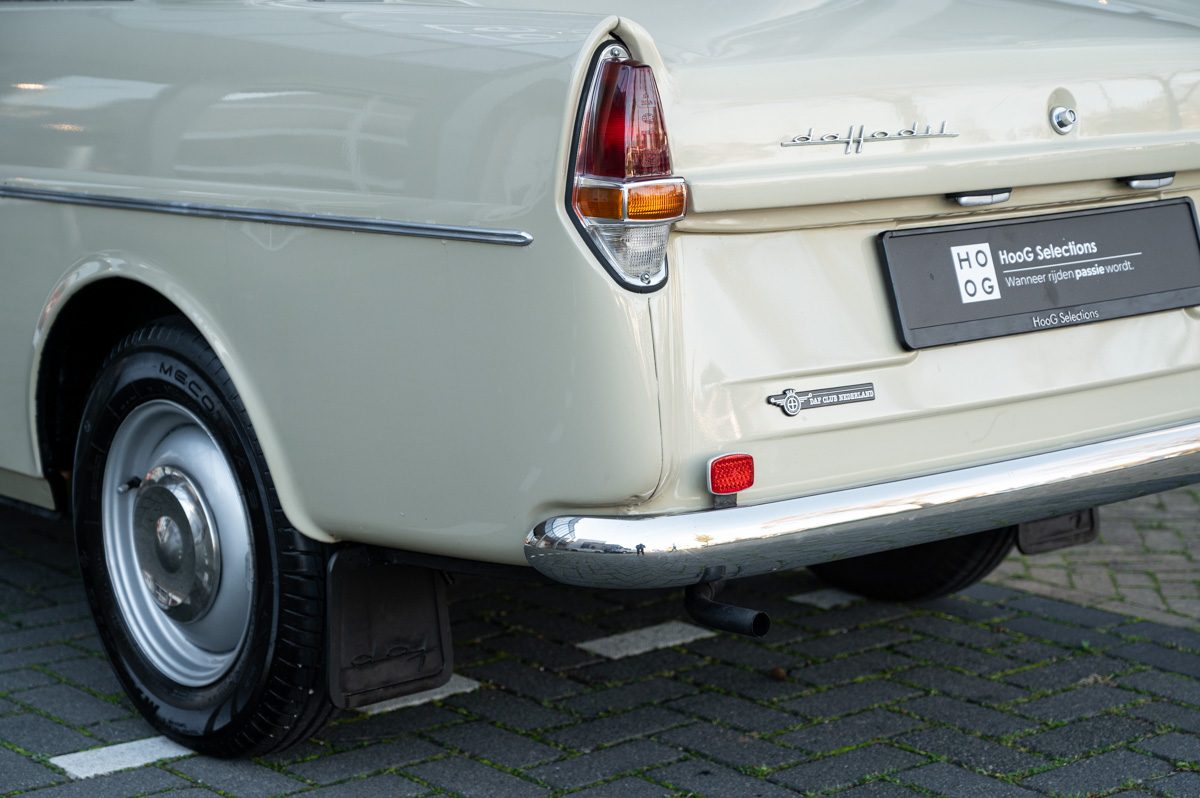
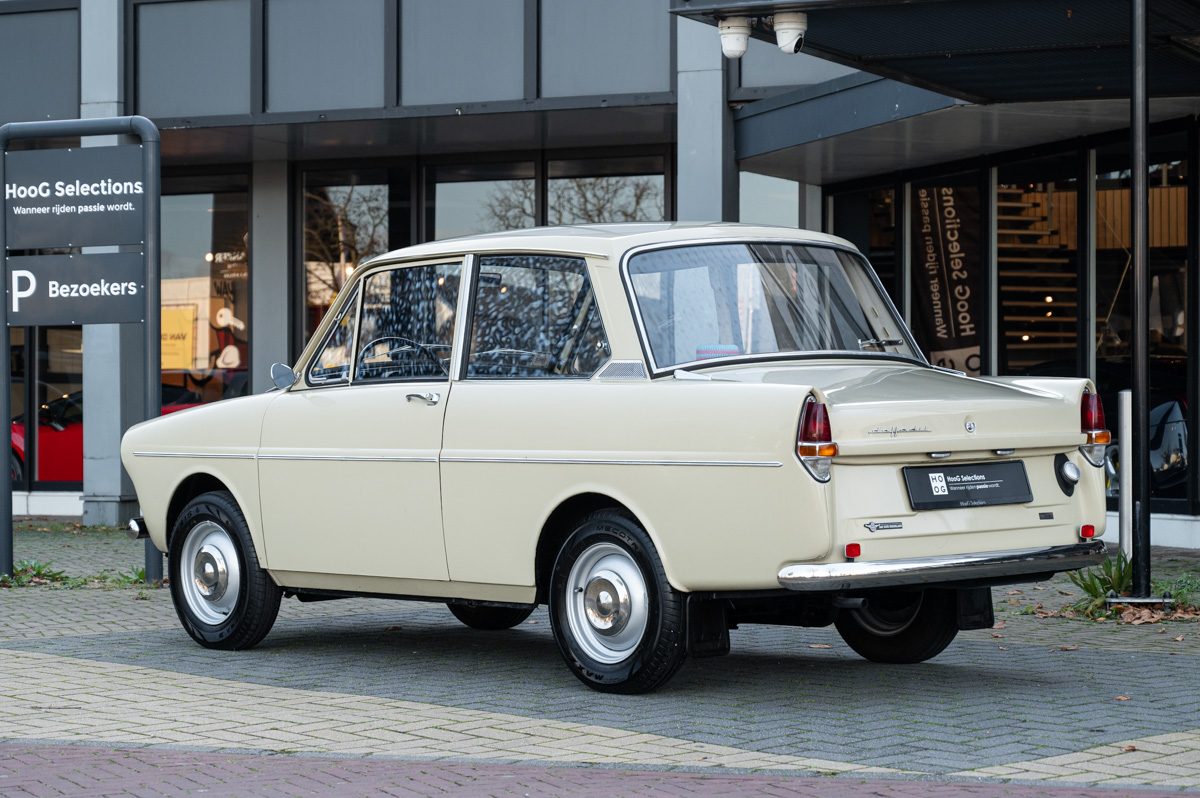
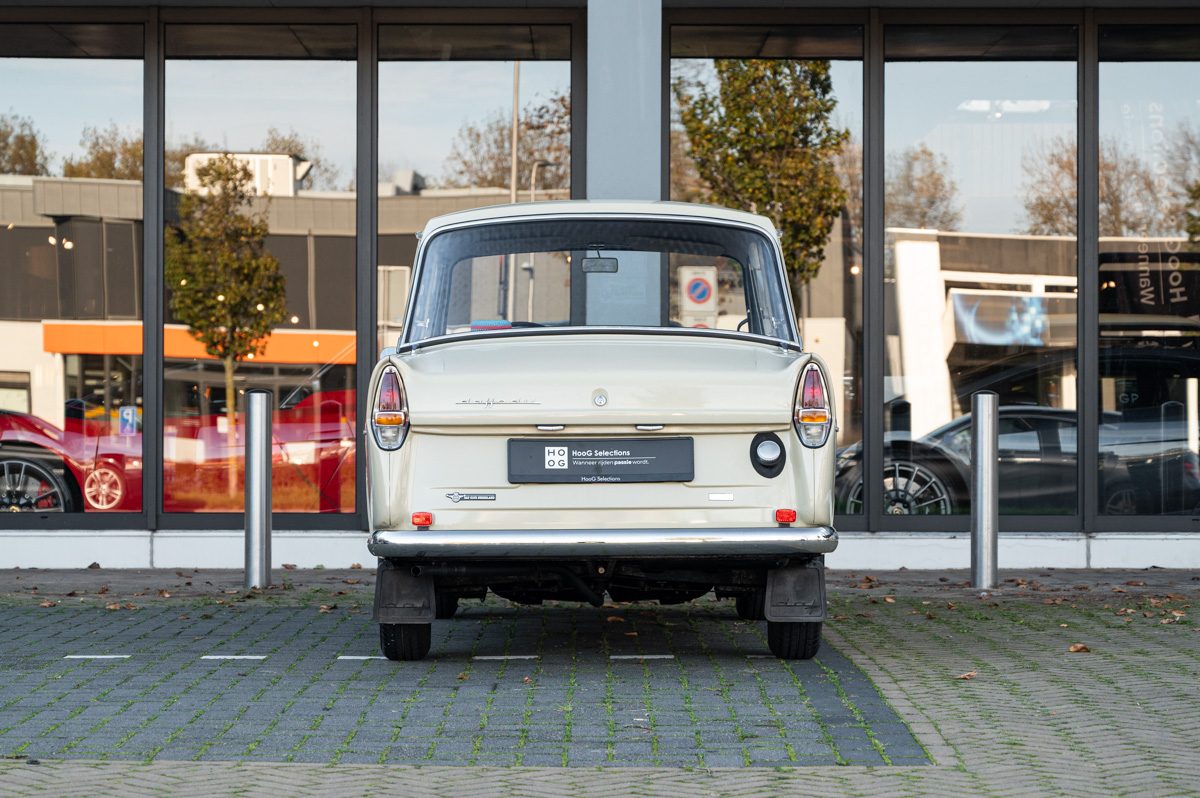
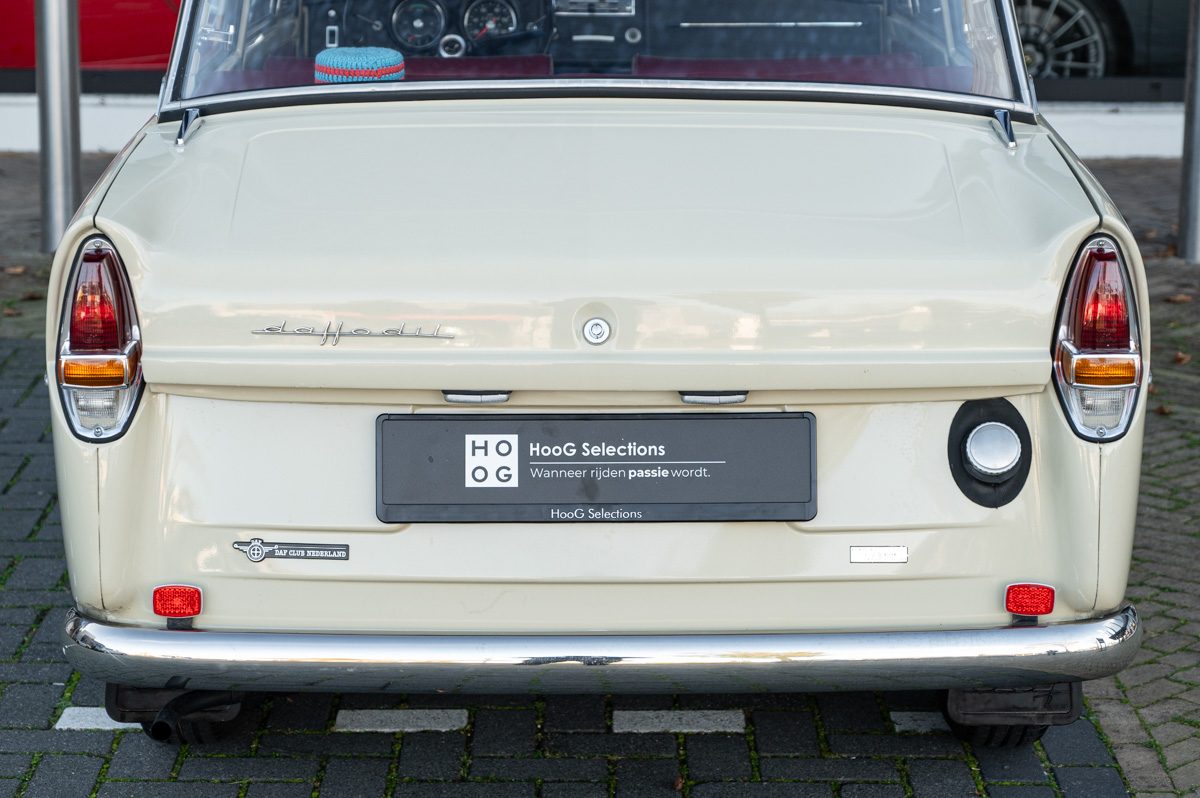
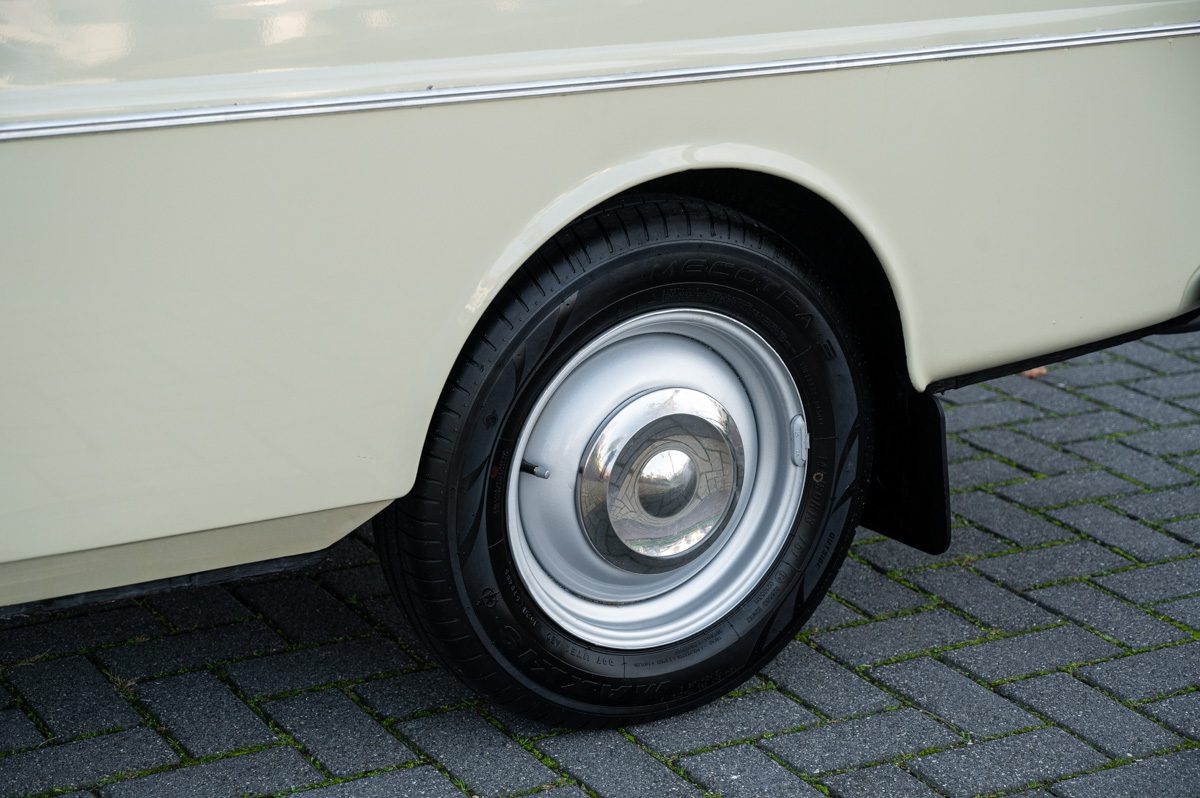
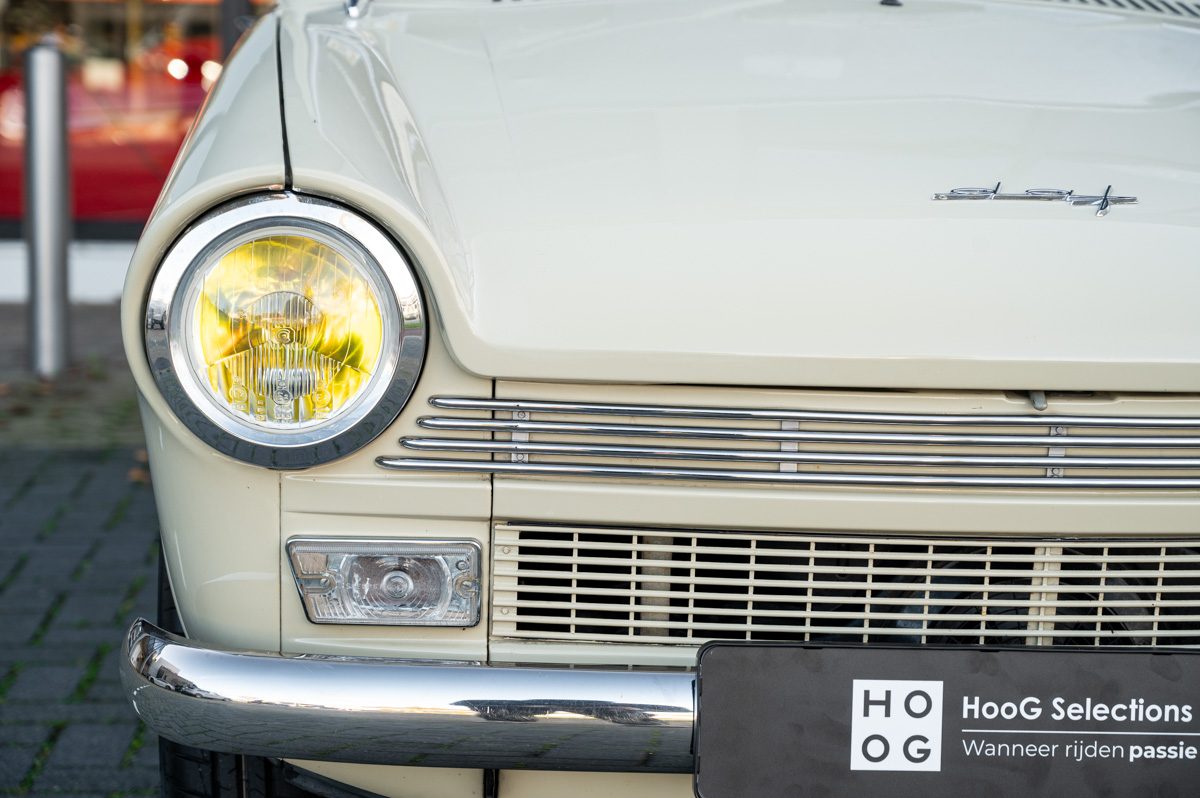
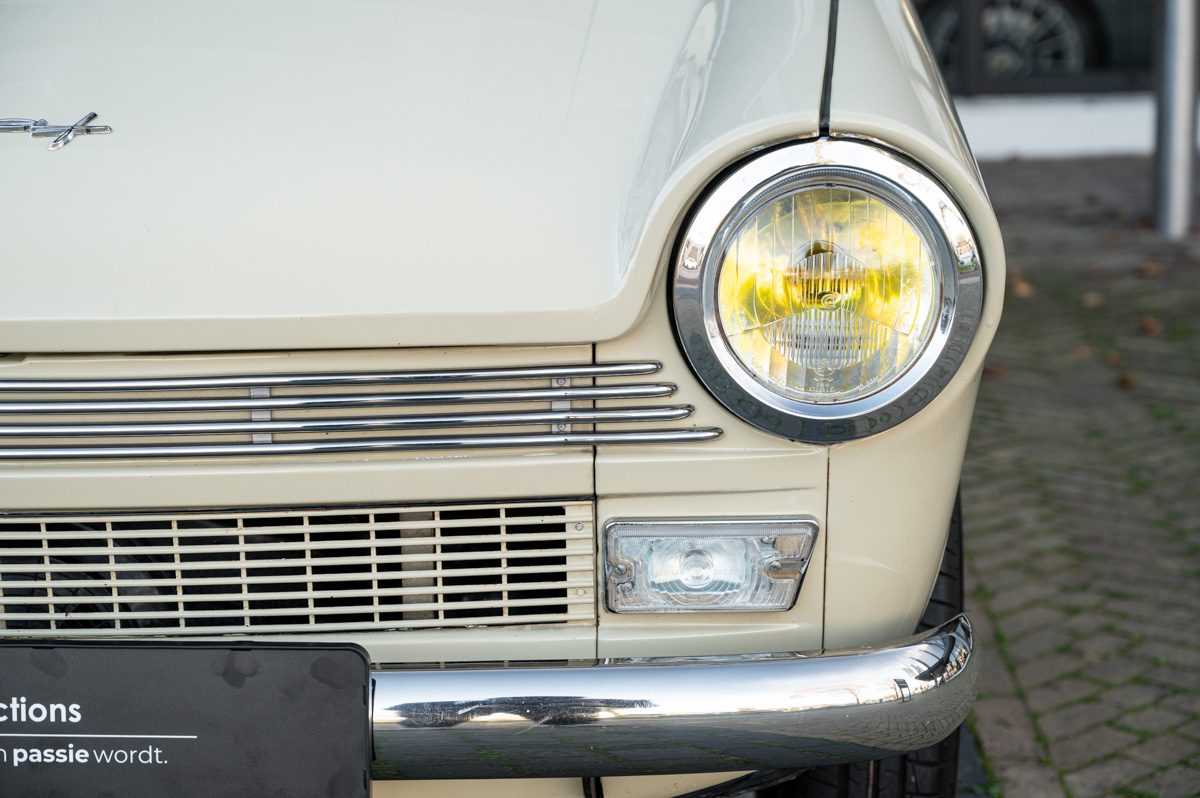
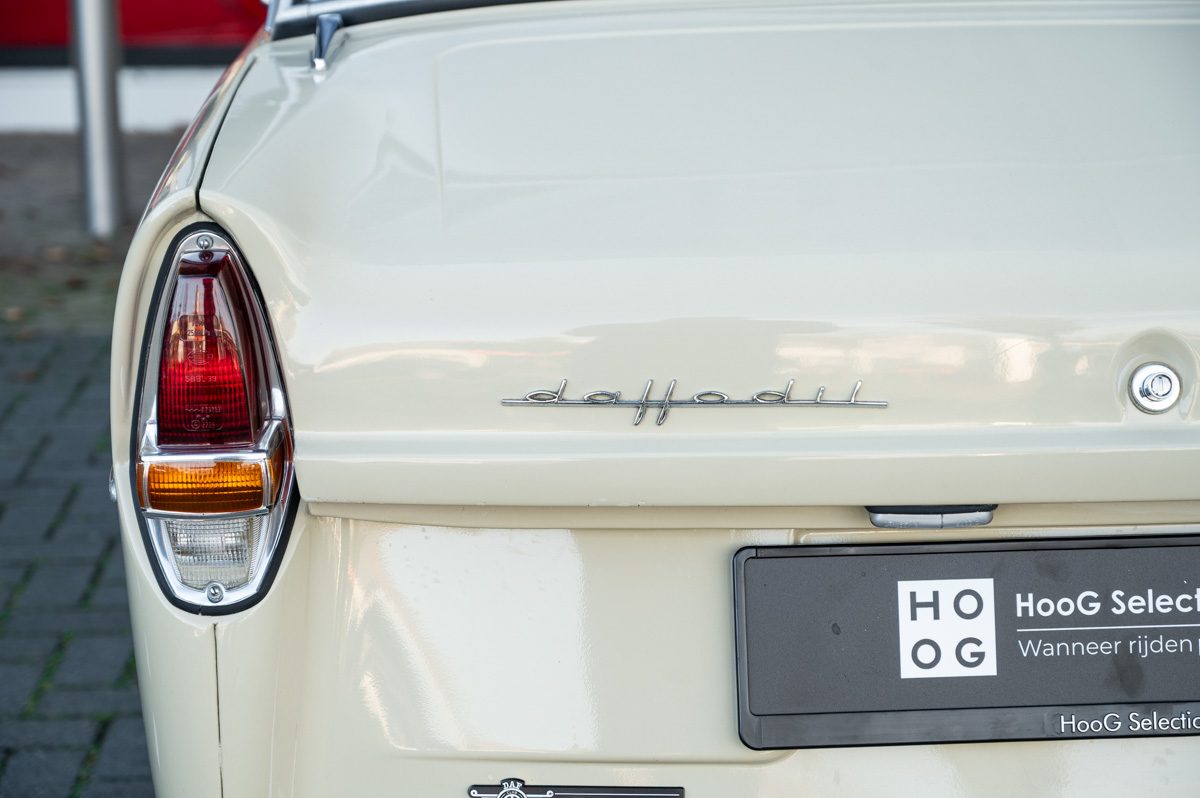
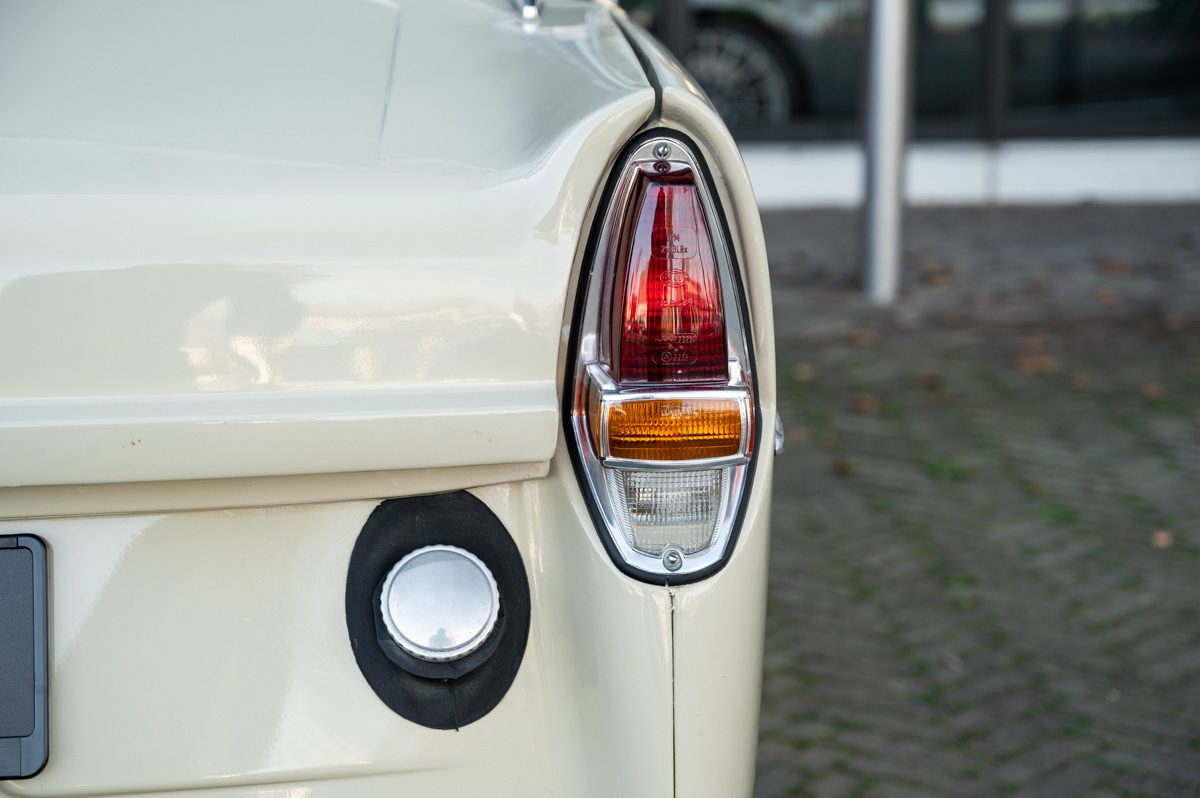
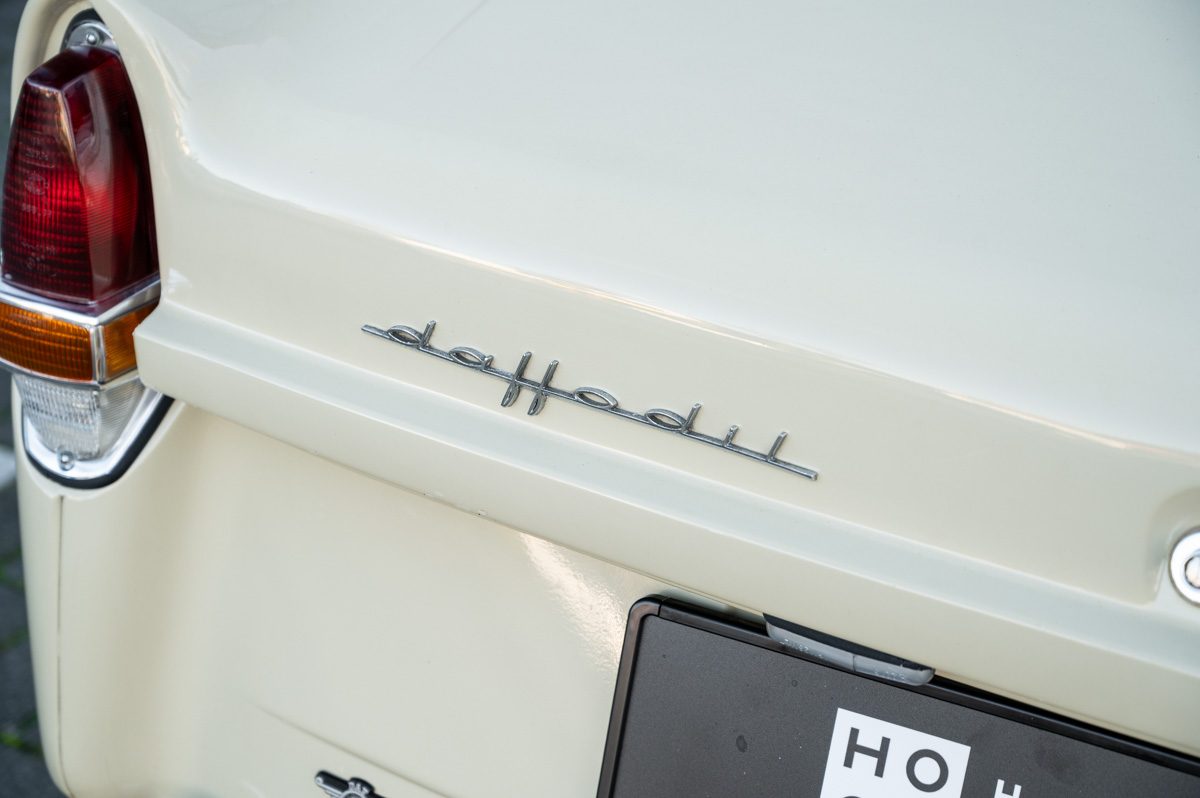
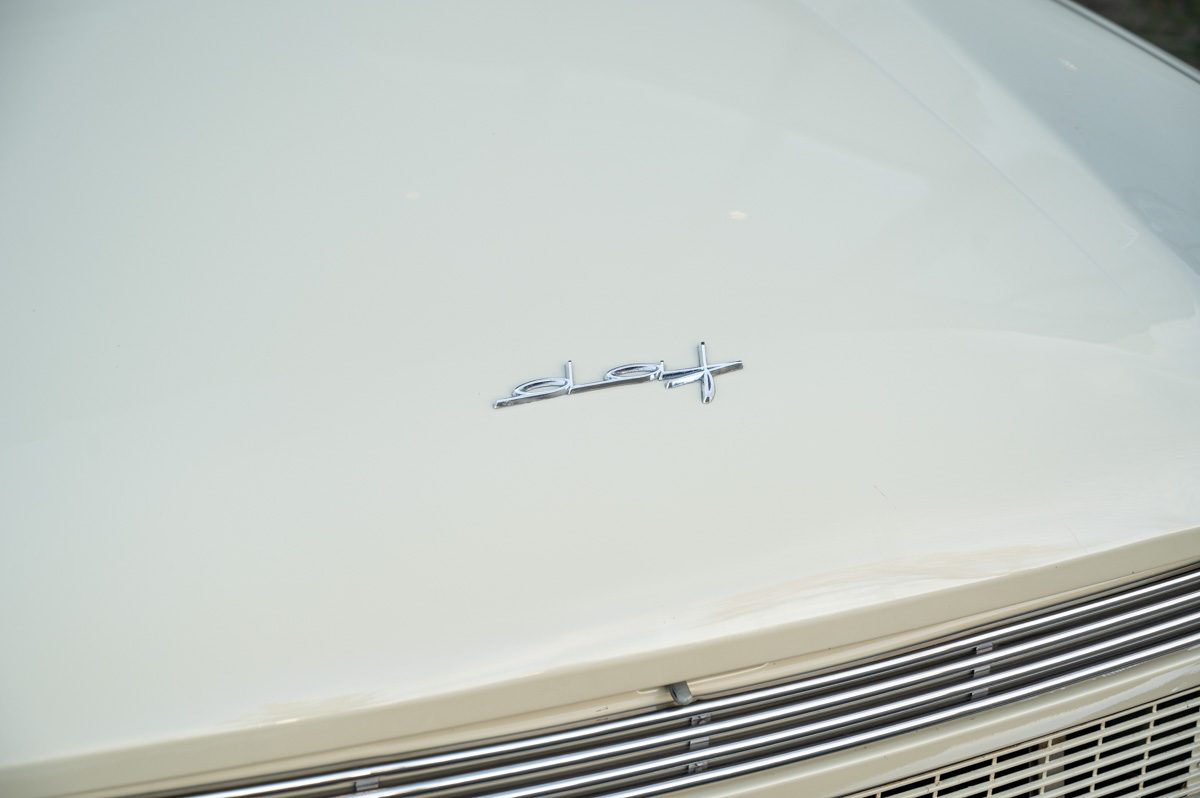
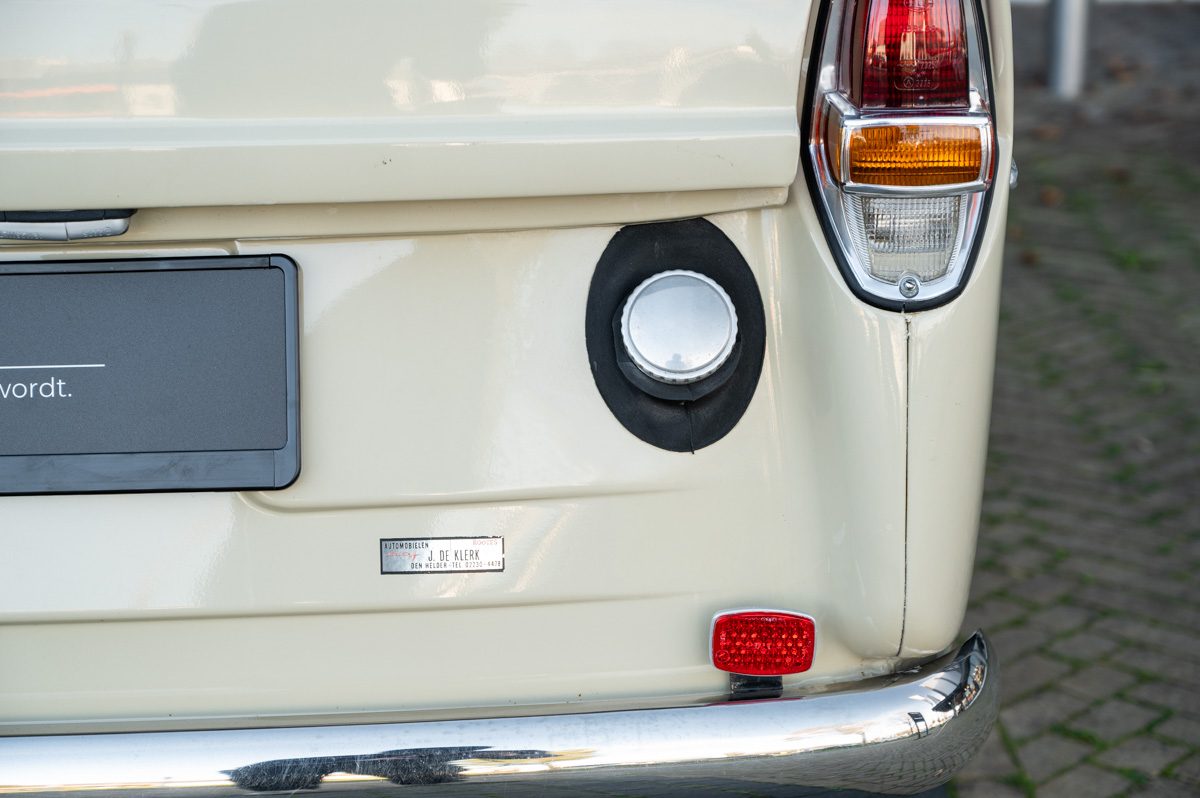
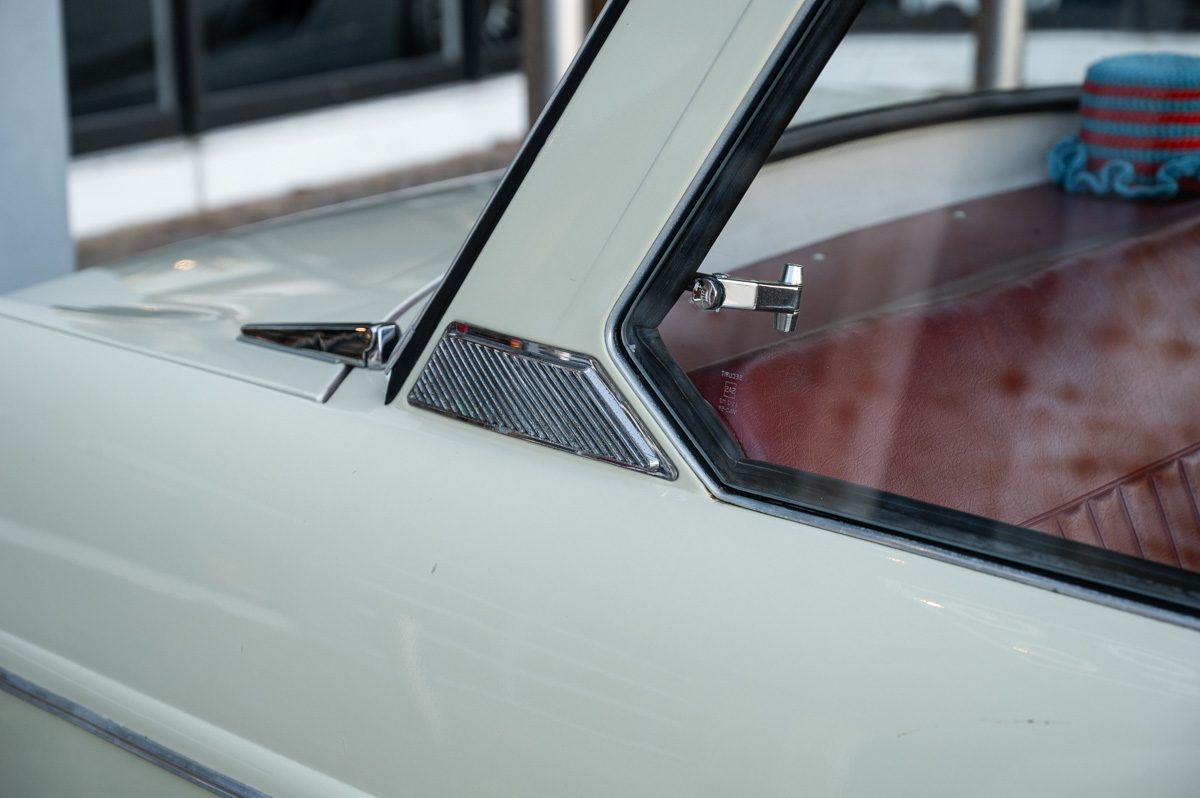
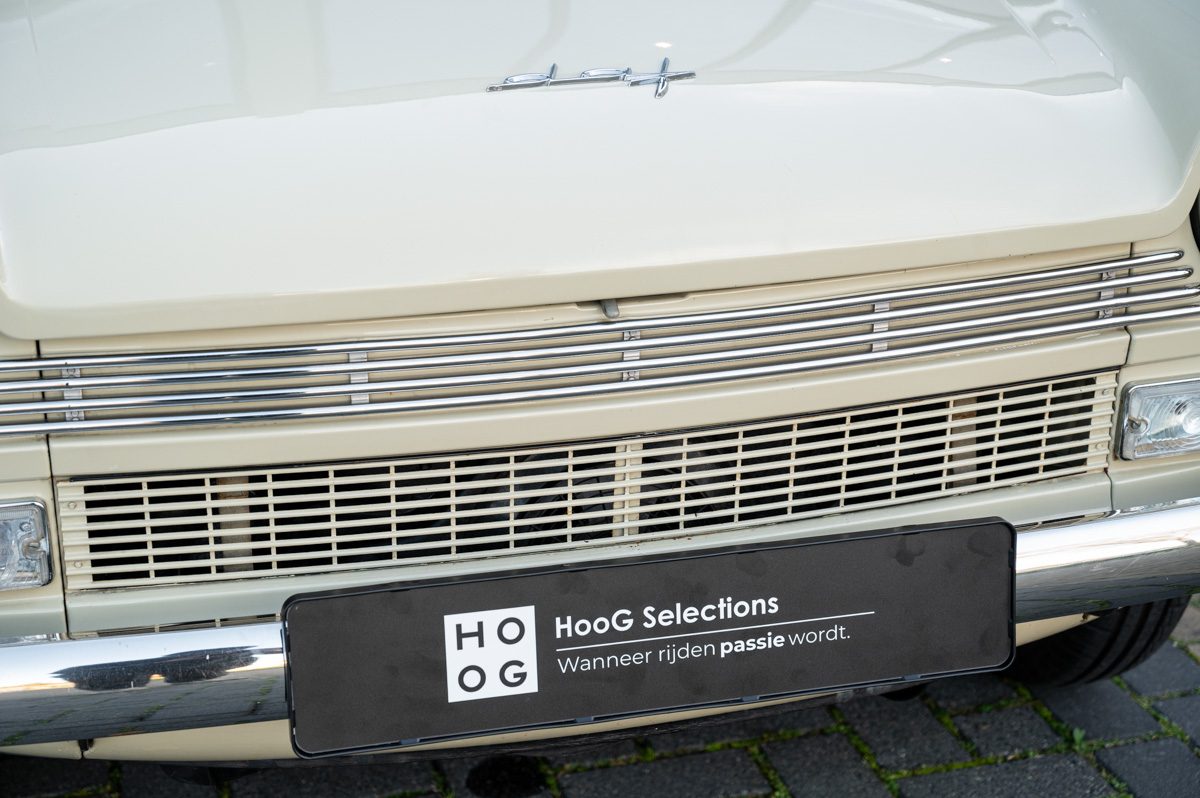
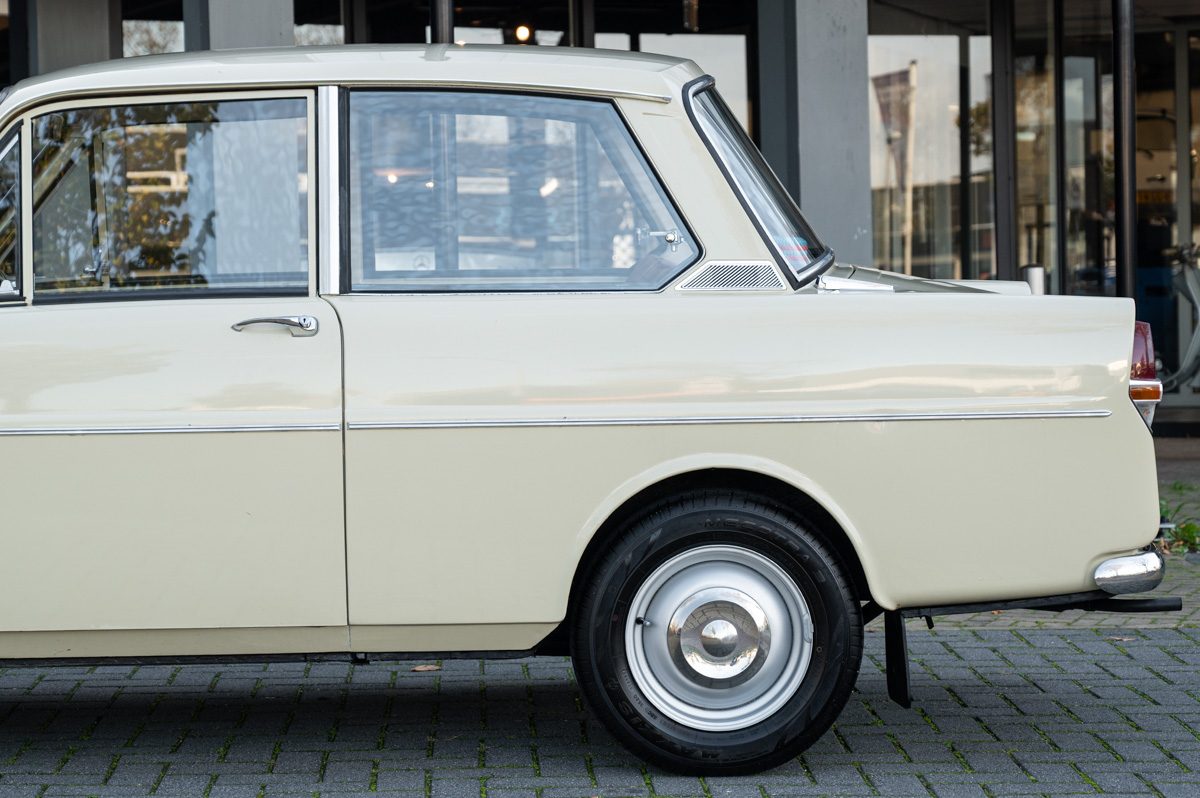
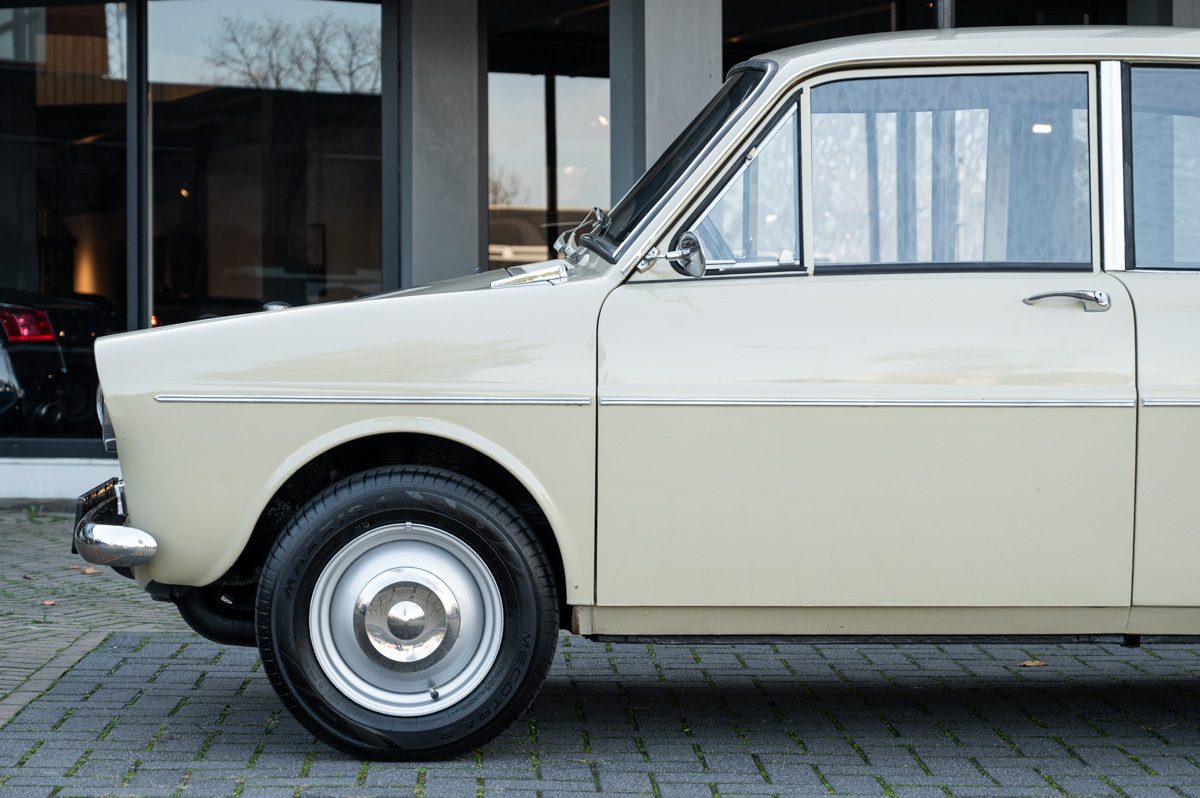
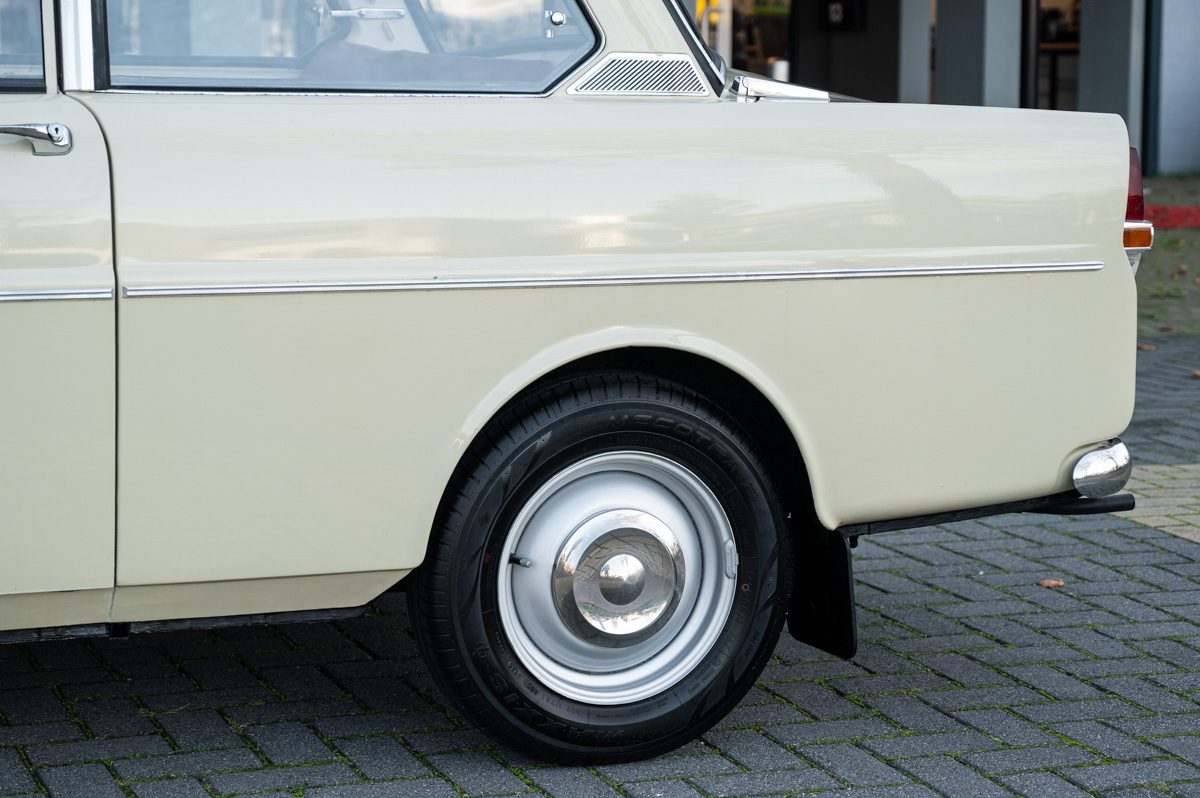
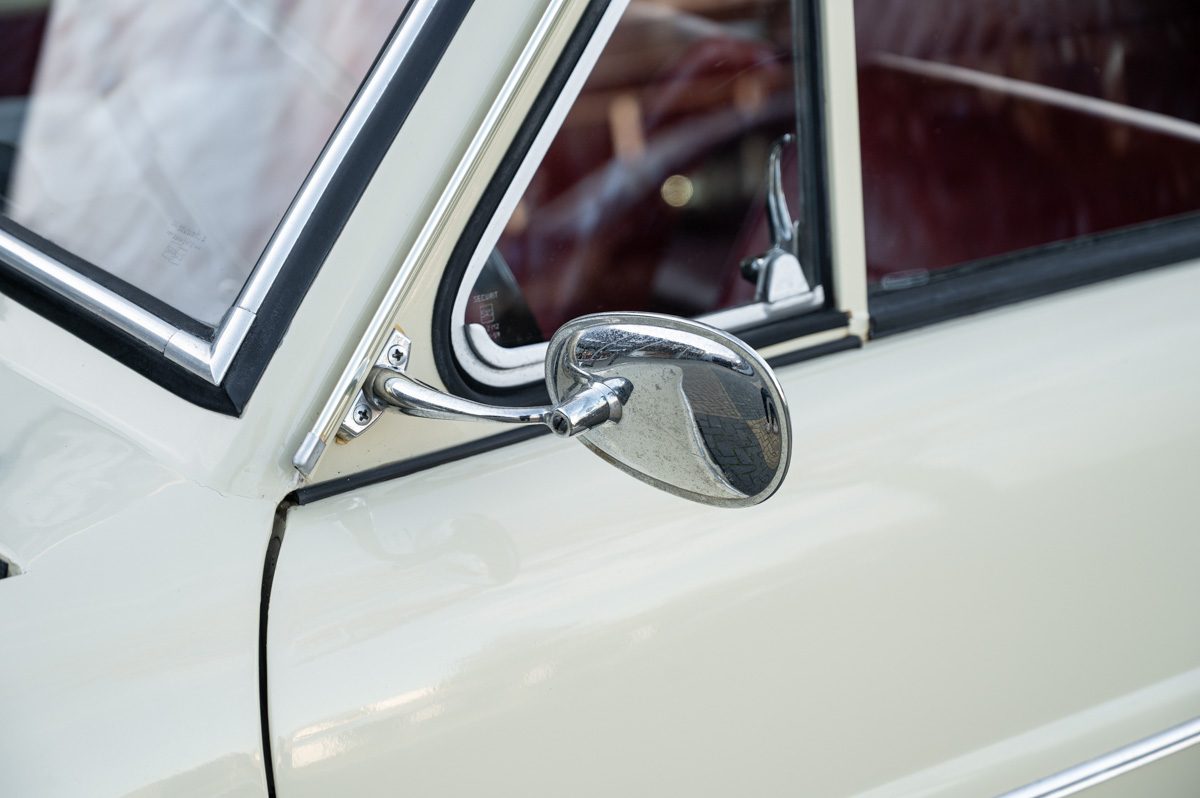
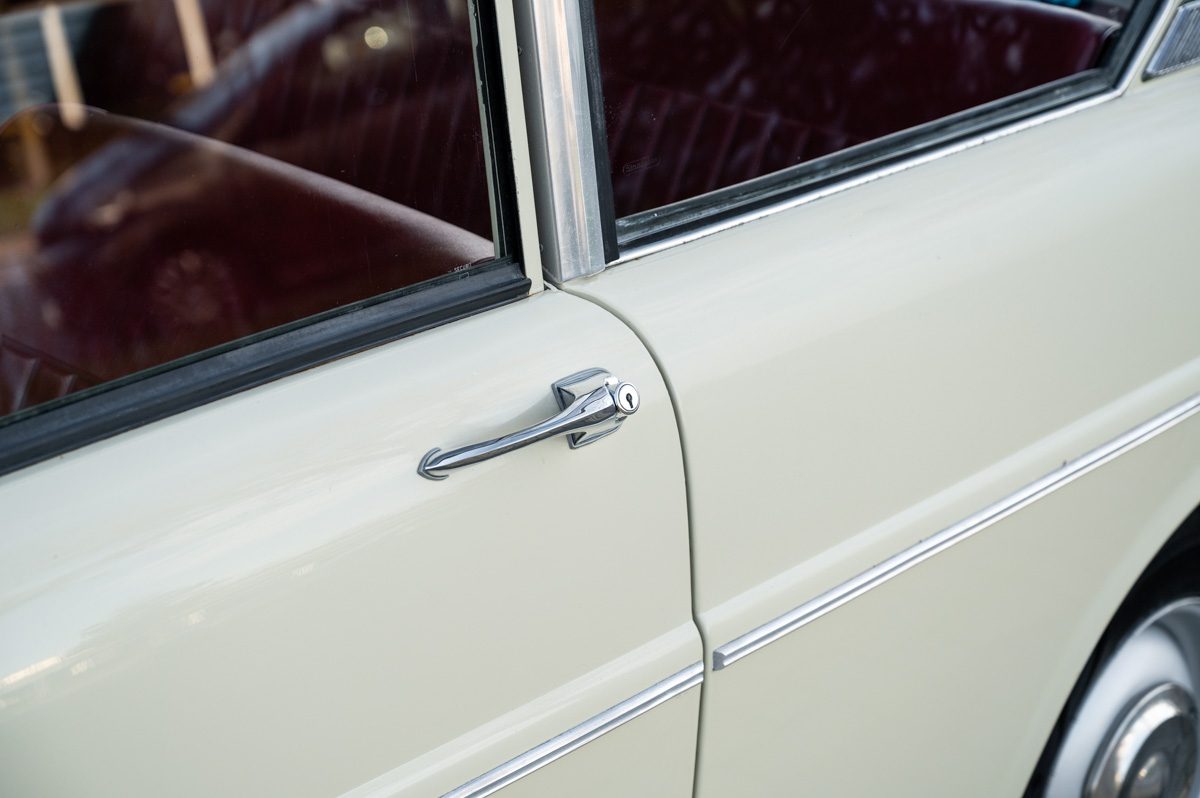
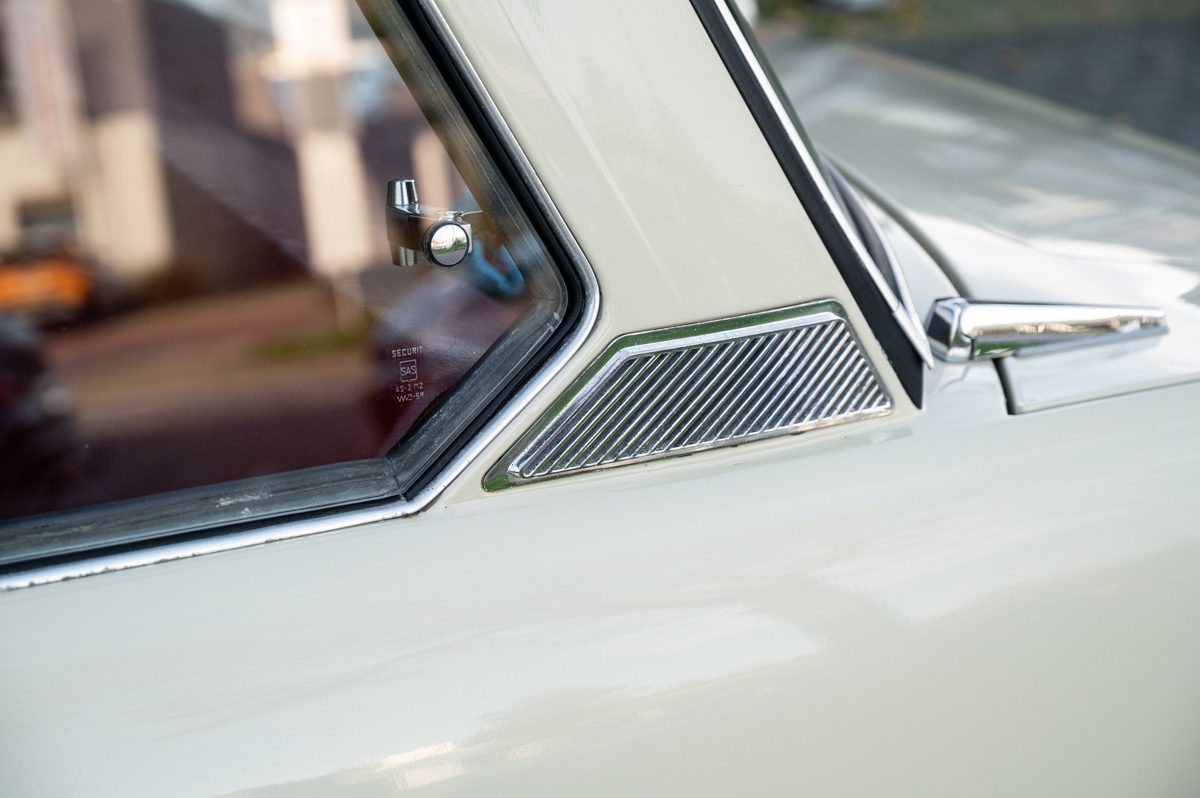
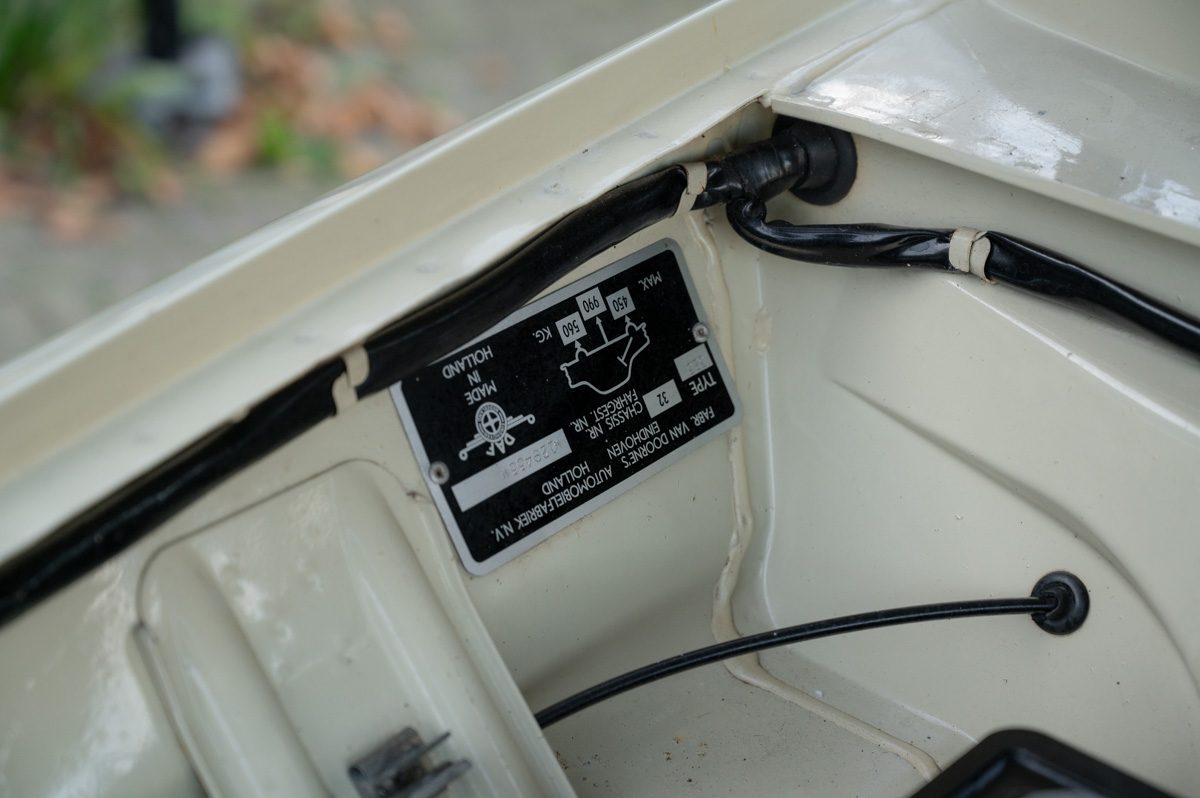
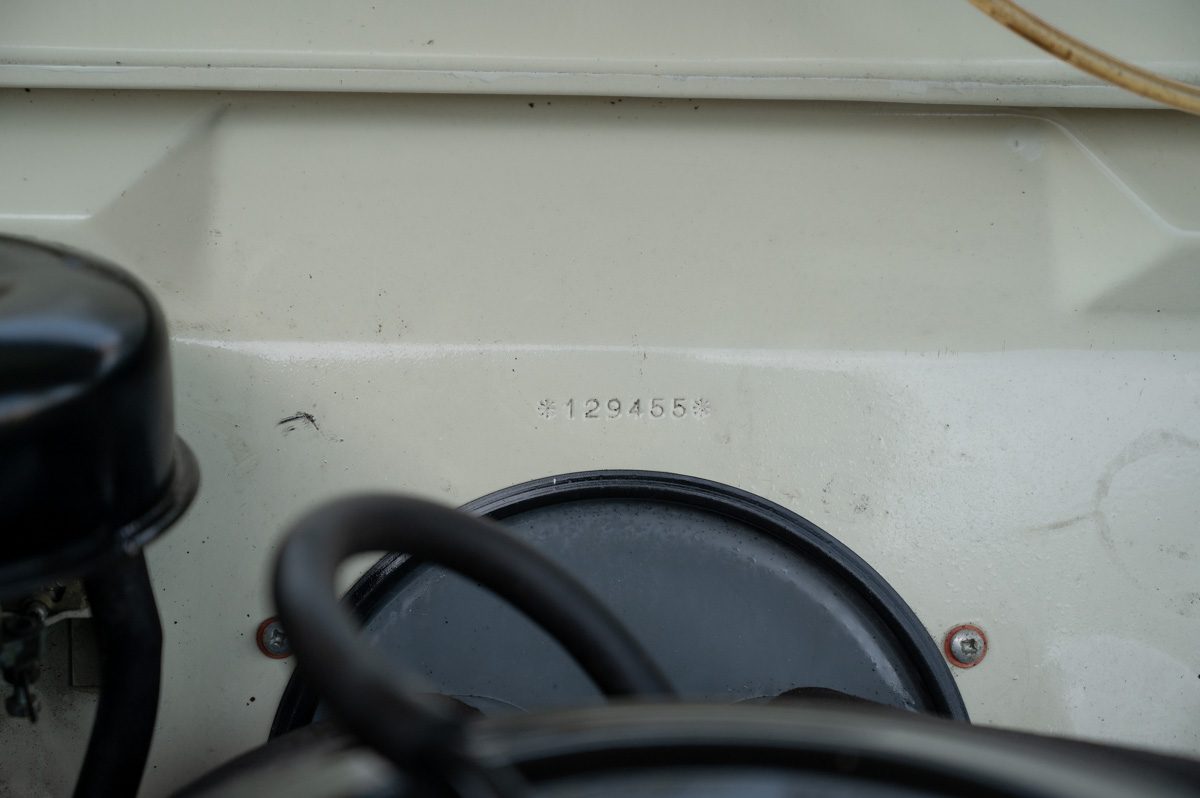
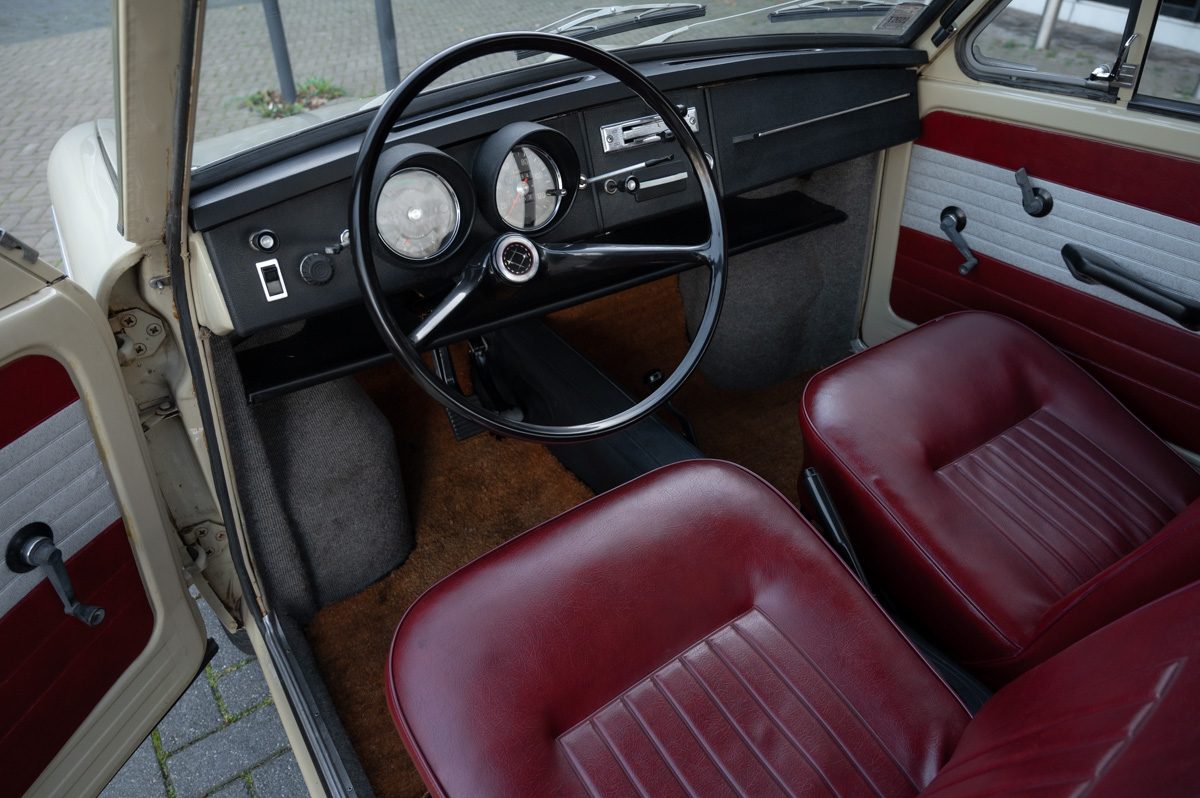
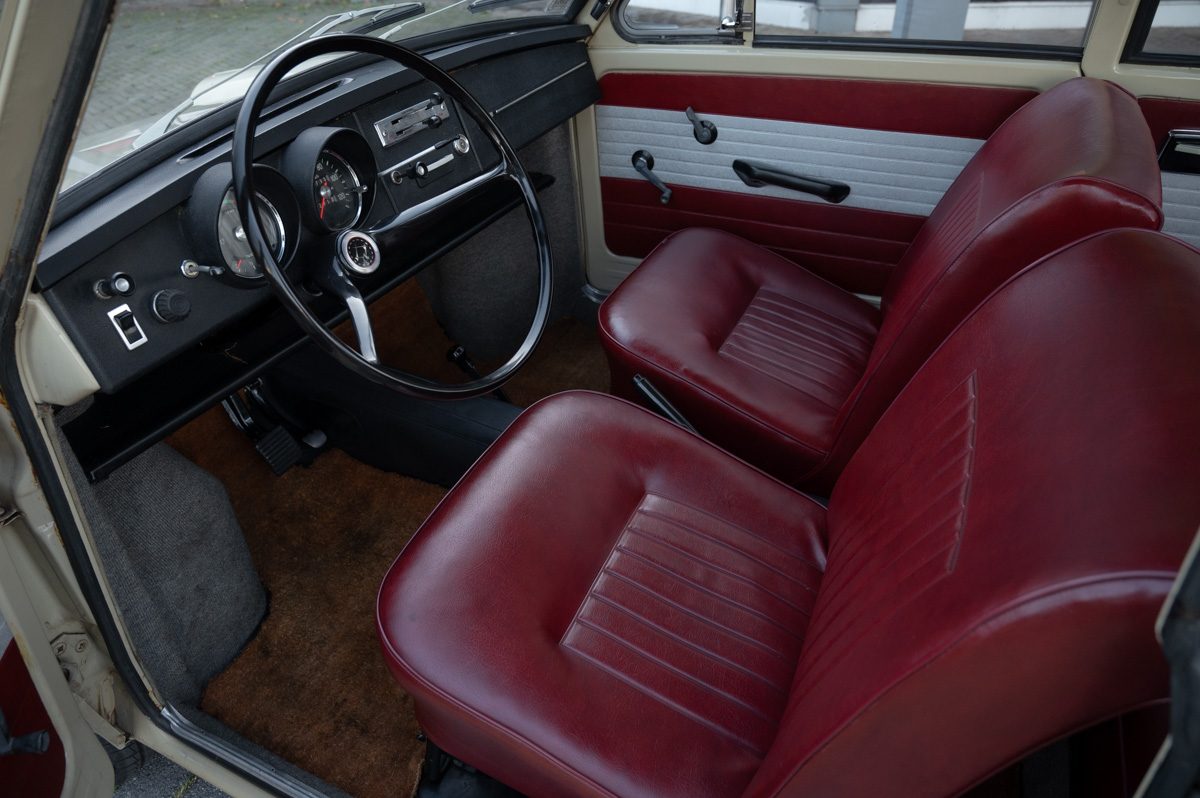
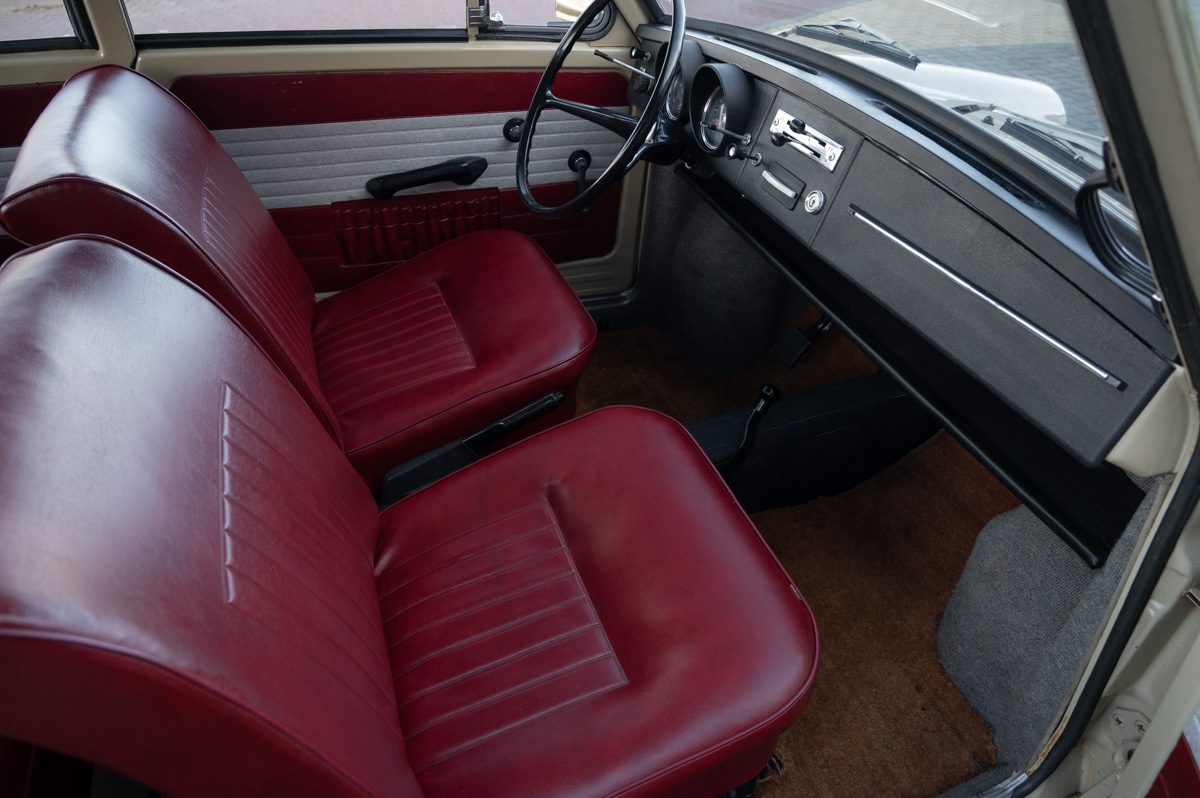
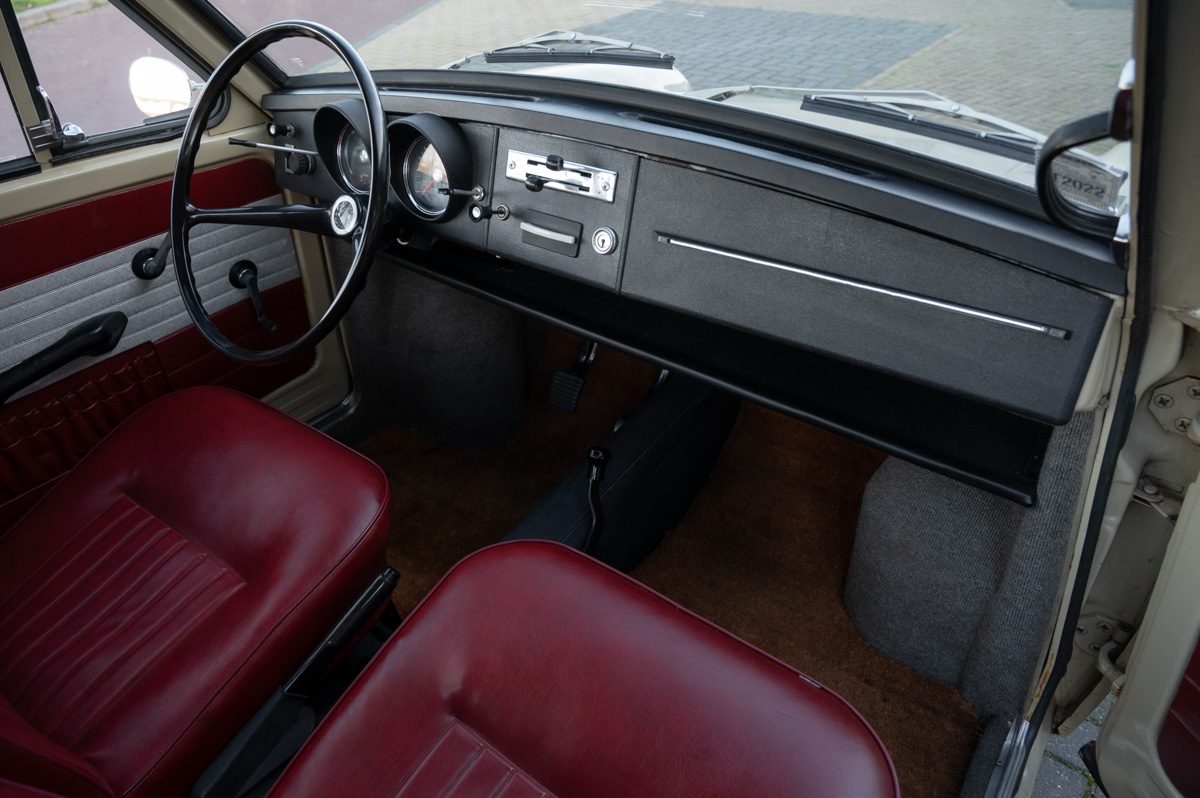
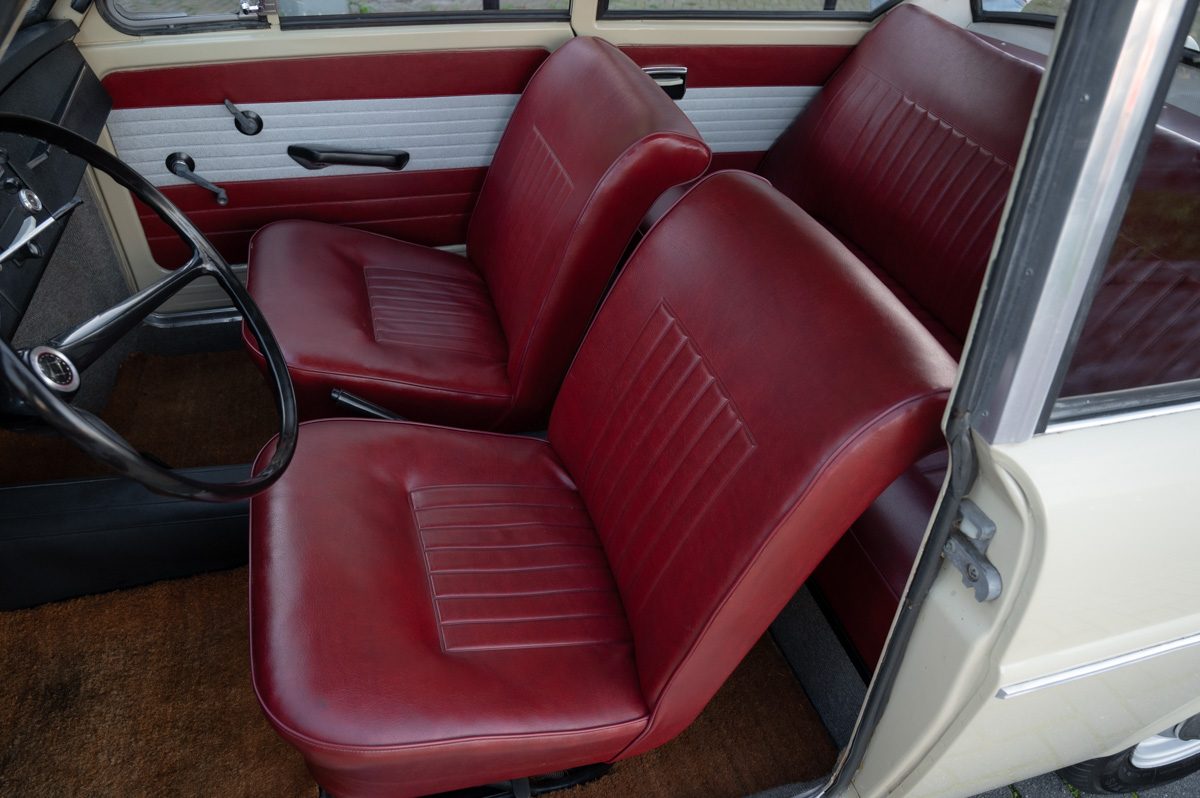
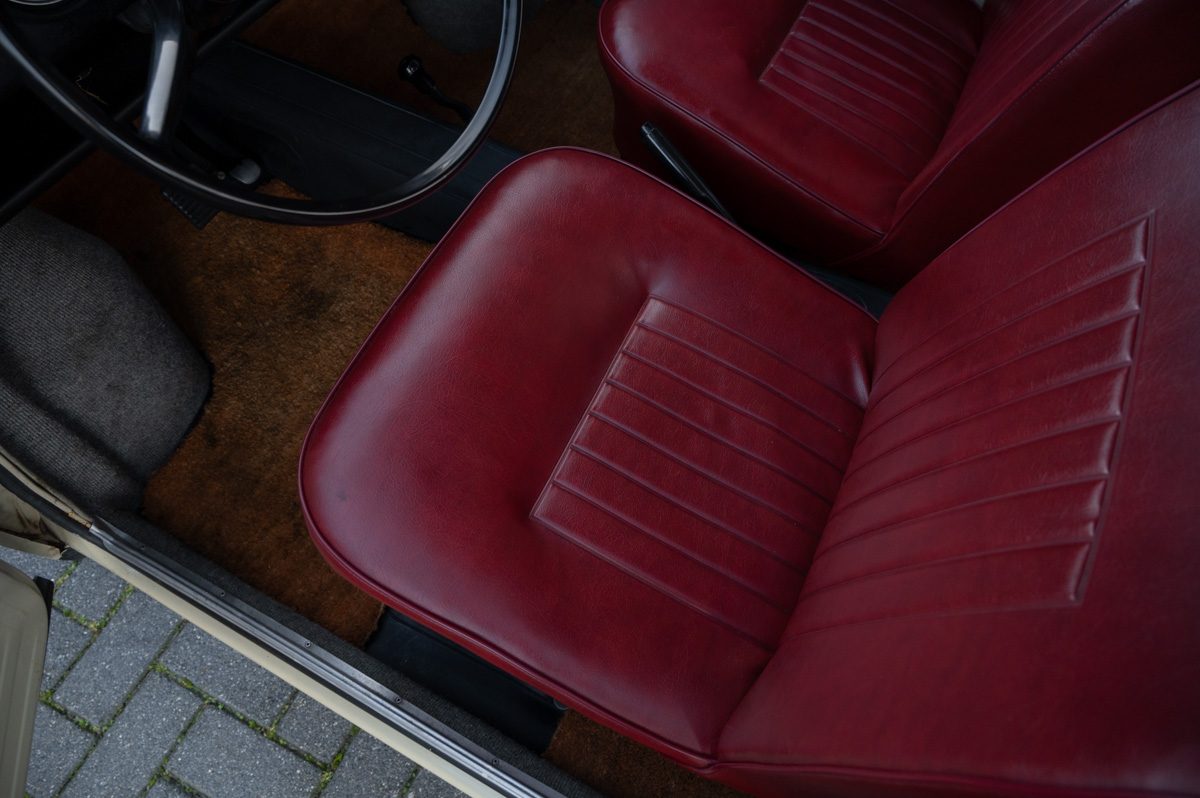
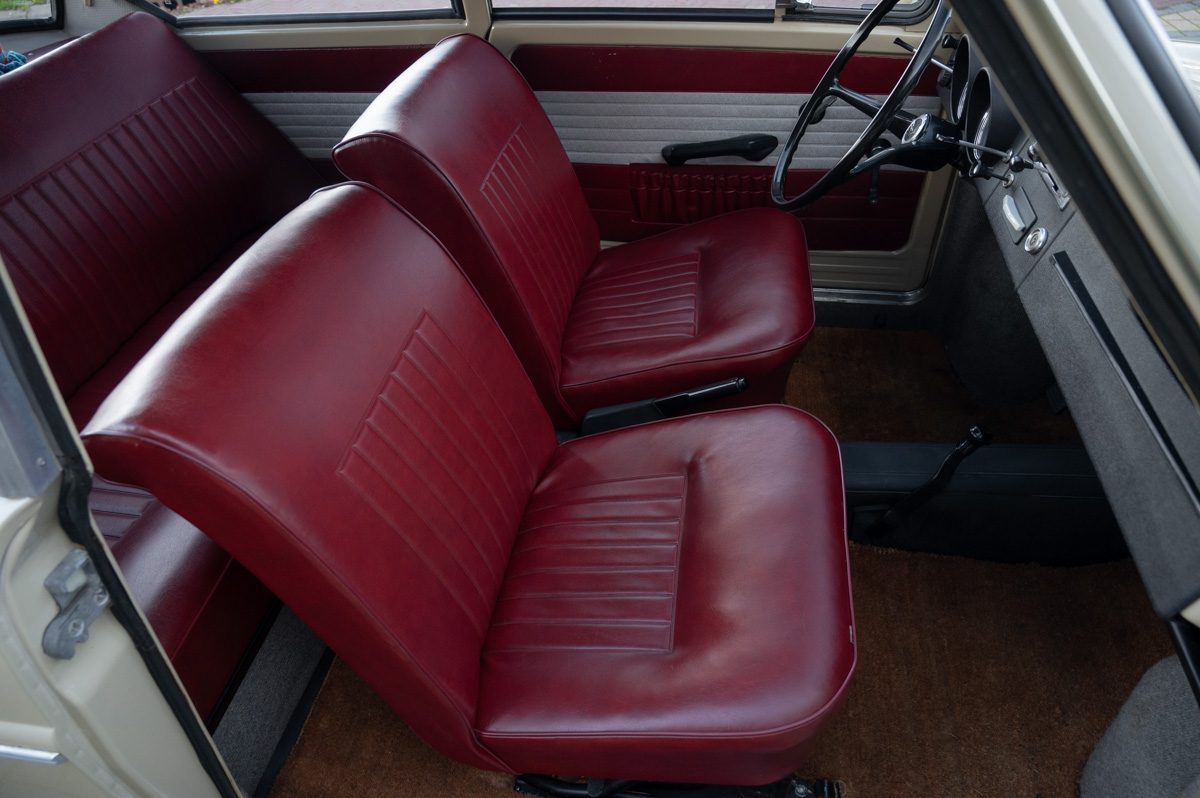
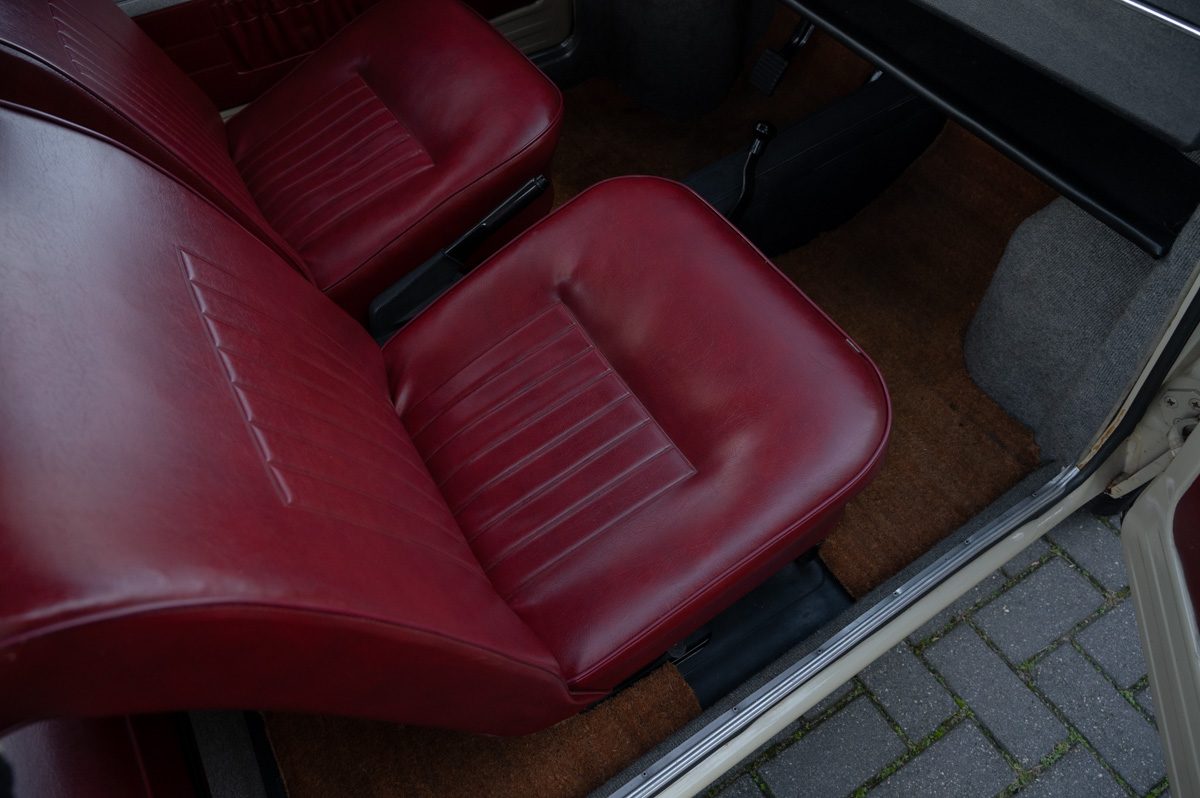
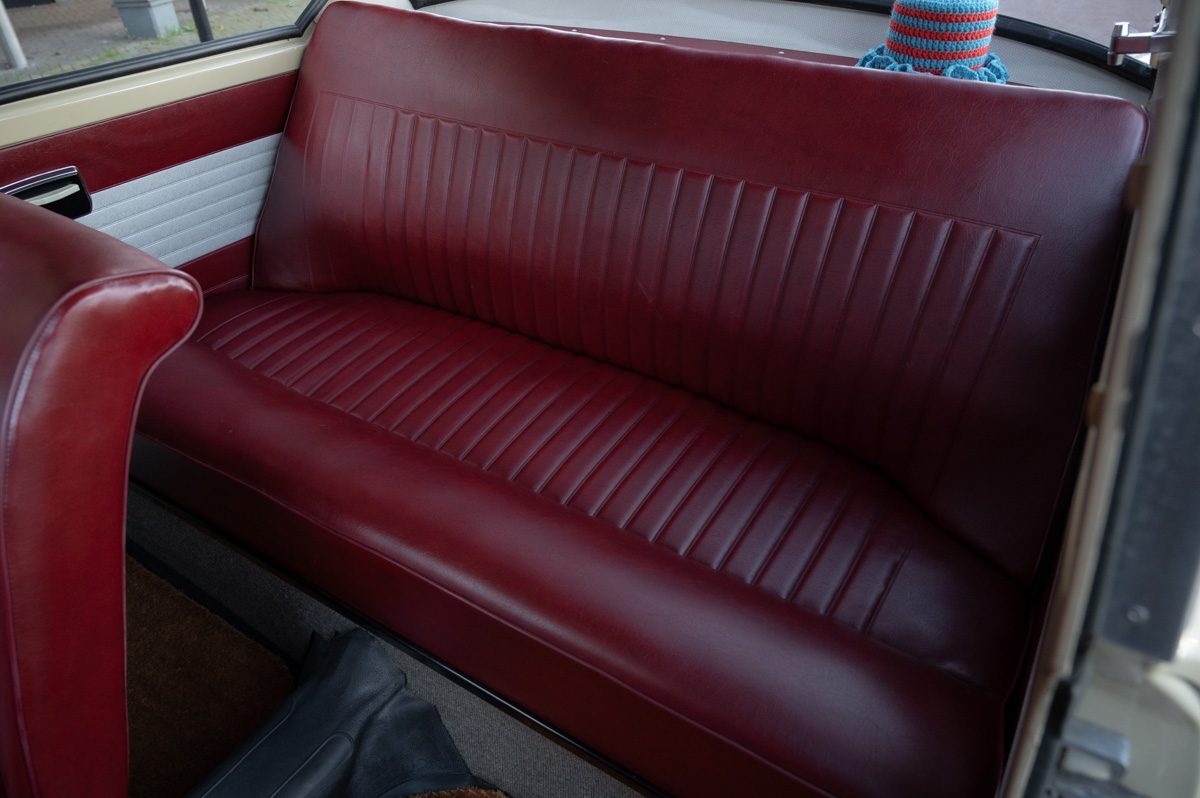
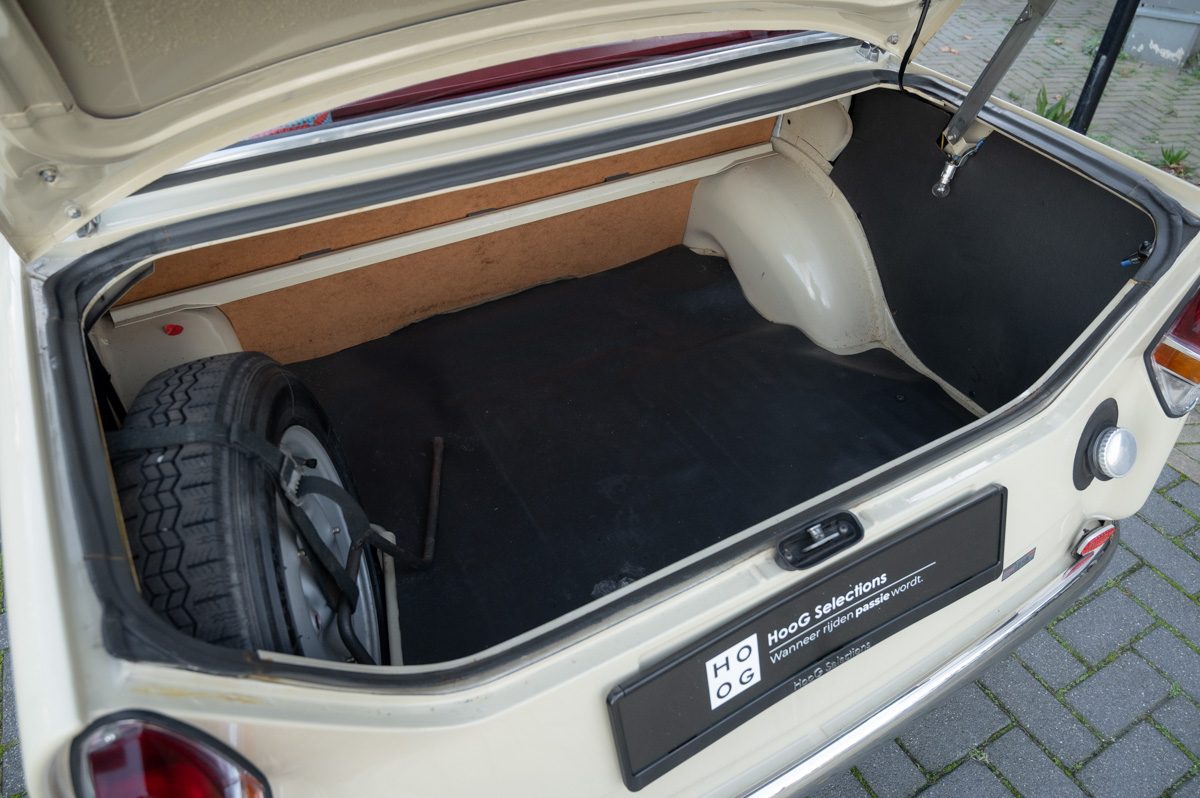
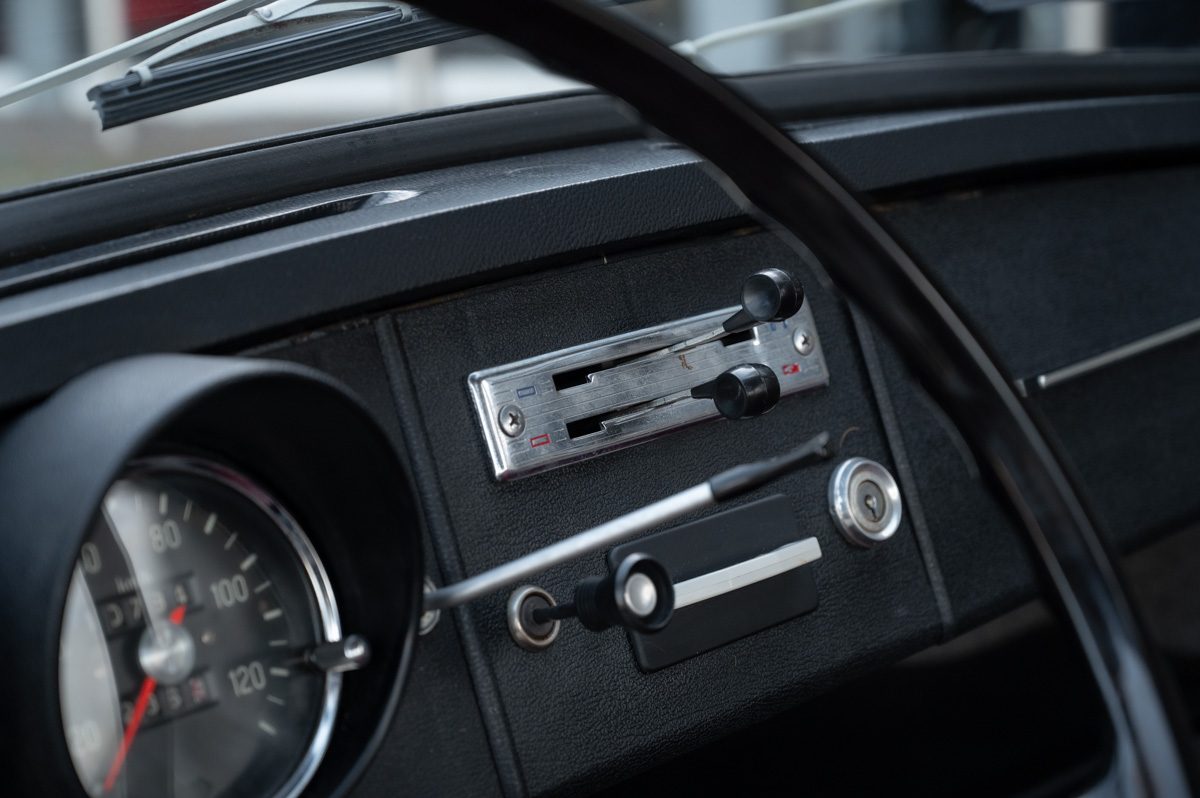
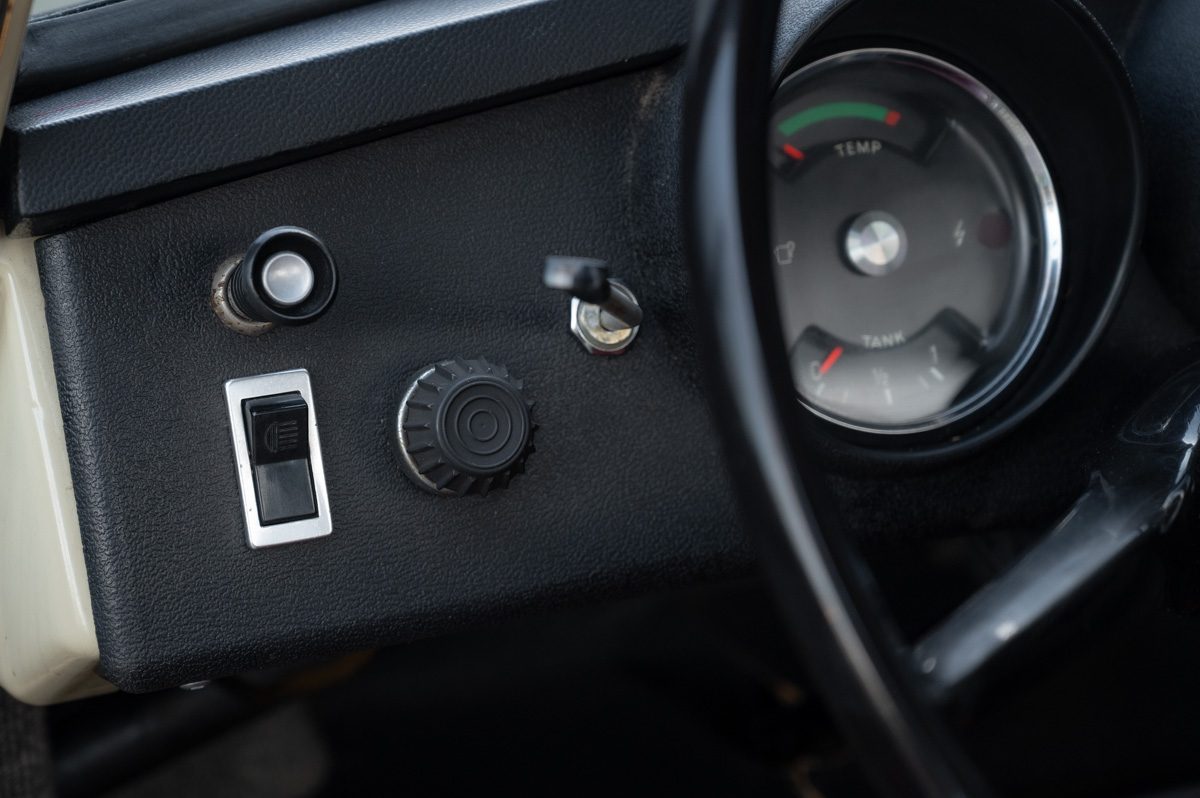
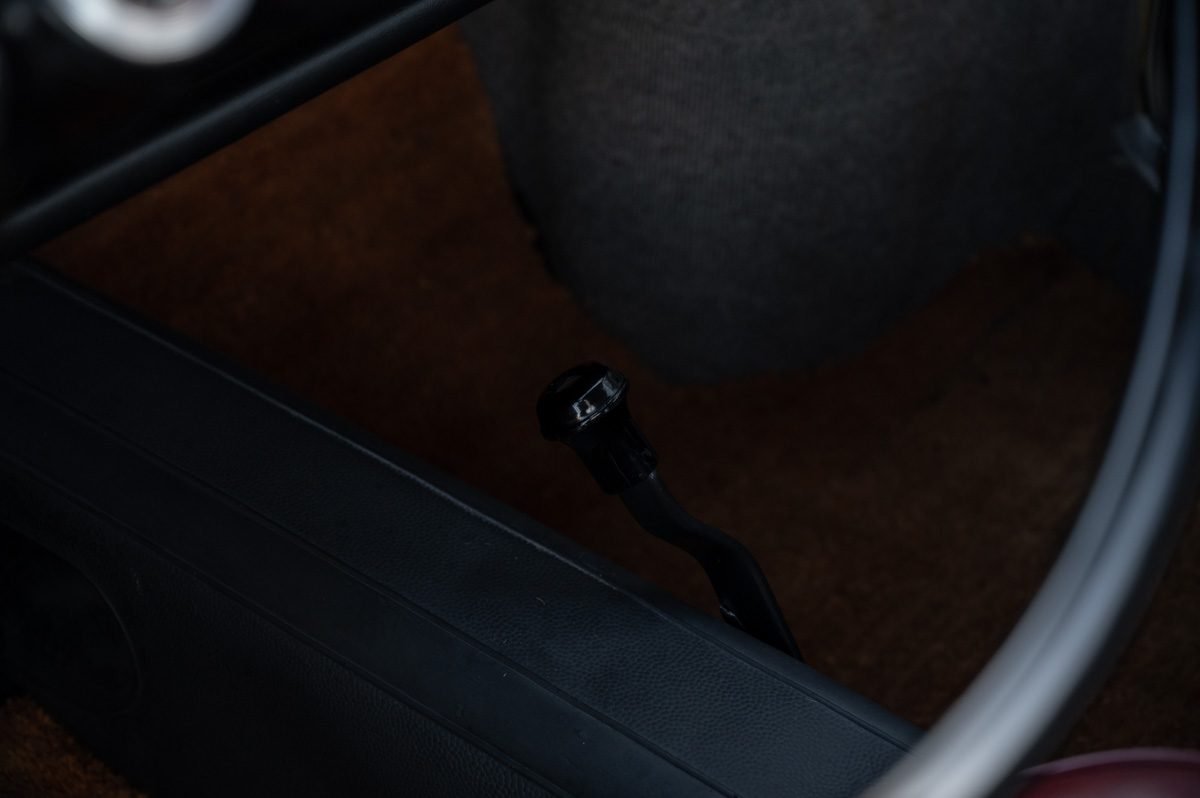
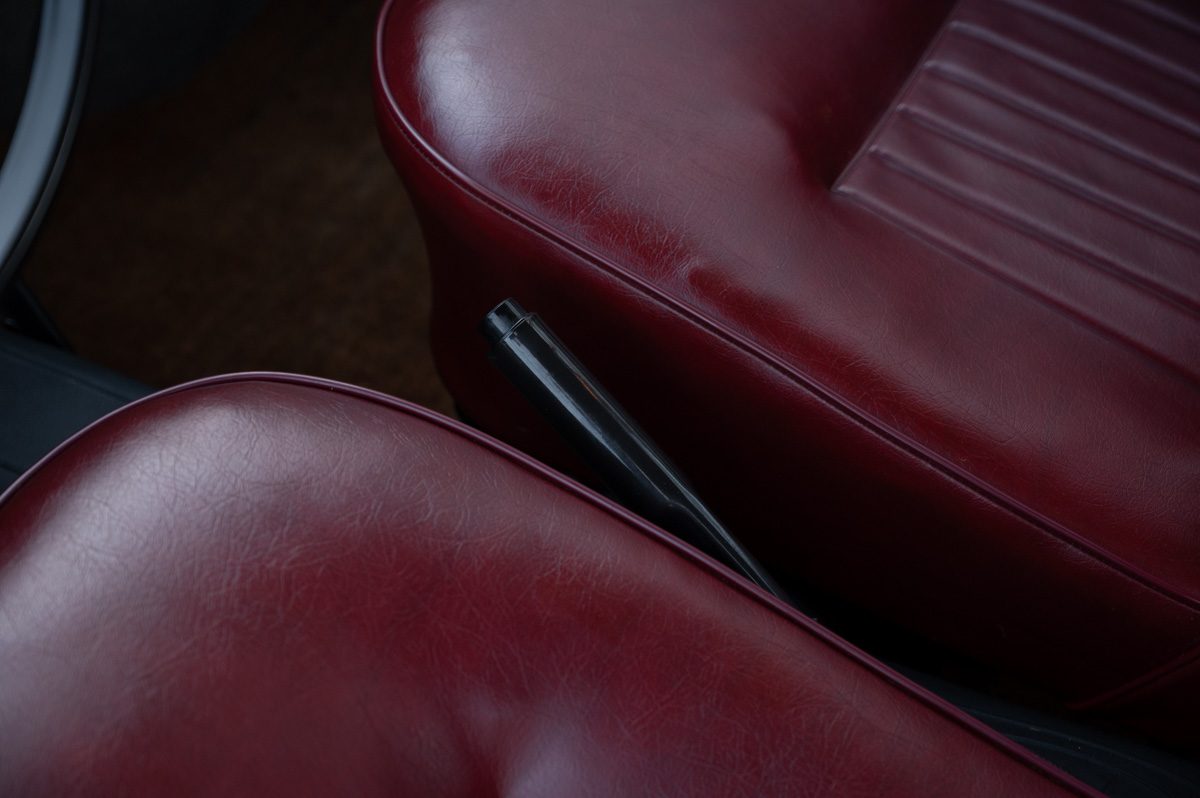
Italy had its Fiat 500, Britain its Mini, France its 2CV and Germany its Volkswagen Beetle. And us? We had the DAF! Or rather, the Daffodil. A quintessentially Dutch little car, dreamed up and built by people who felt that driving should be above all practical, affordable and not overly complicated. No Italian temperament, no French eccentricity and certainly no German delusions of grandeur.
Just a solid, dependable car that could take the average Dutchman to church on a Sunday morning, round to the in-laws for coffee in the afternoon and, come summer, chugging off to the campsite on the Veluwe with the whole family aboard.
The DAF was the car that put motoring within reach of a great many Dutch people. After all, not everyone could stretch to a new Opel or Ford, let alone a Mercedes. But a DAF, that was a different story. First bought new by the local shopkeeper, traded in a few years later at the garage on the corner and eventually passed on, third, fourth or tenth hand, to a nephew, a neighbour or a young family finally ready to trade up from the moped.
Ask any Dutchman over sixty about his first car and there is a fair chance a DAF turns up somewhere in the tale. Or one belonging to his father, his aunt or the chap next door who stood polishing it every Saturday afternoon.
It was also the archetypal nurse's car (in Britain you might picture the district nurse's trusty runabout). A notion that has all but vanished these days, but back then everyone knew exactly what it meant. The district nurse driving from patient to patient, the nuns from the local convent, the schoolmistress who finally had wheels of her own.
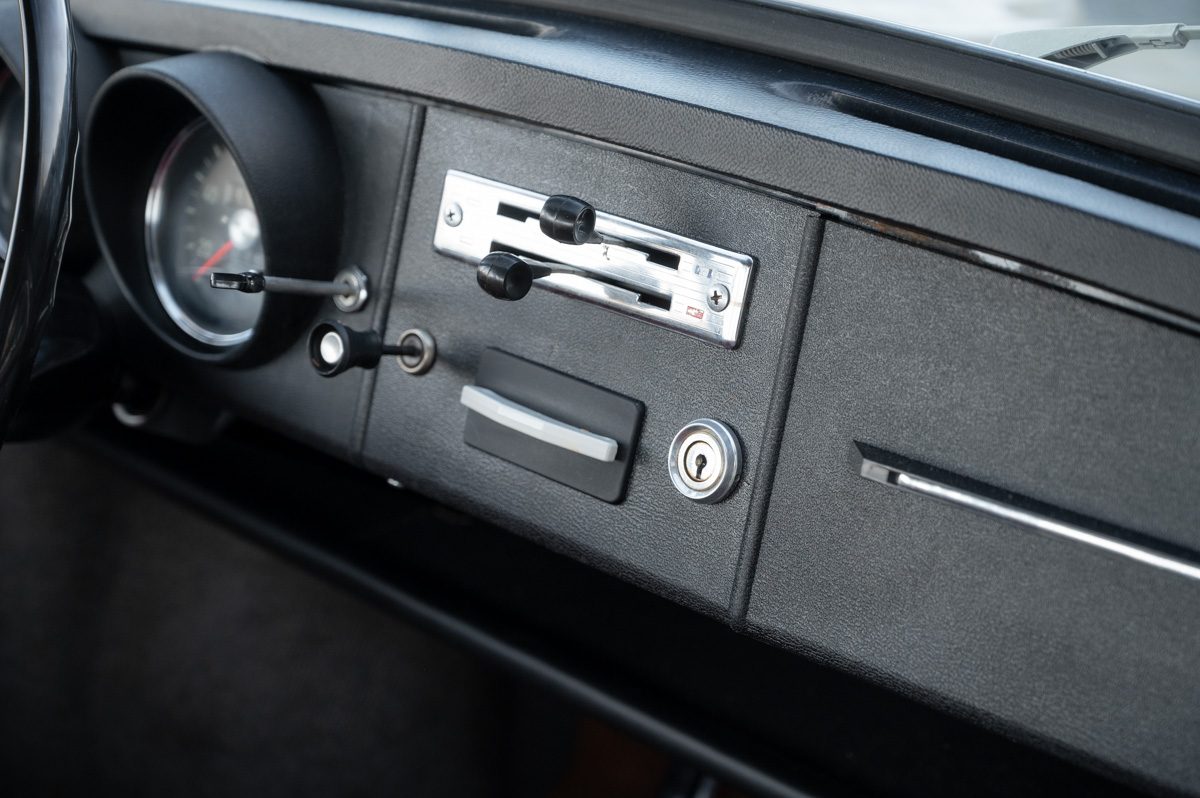
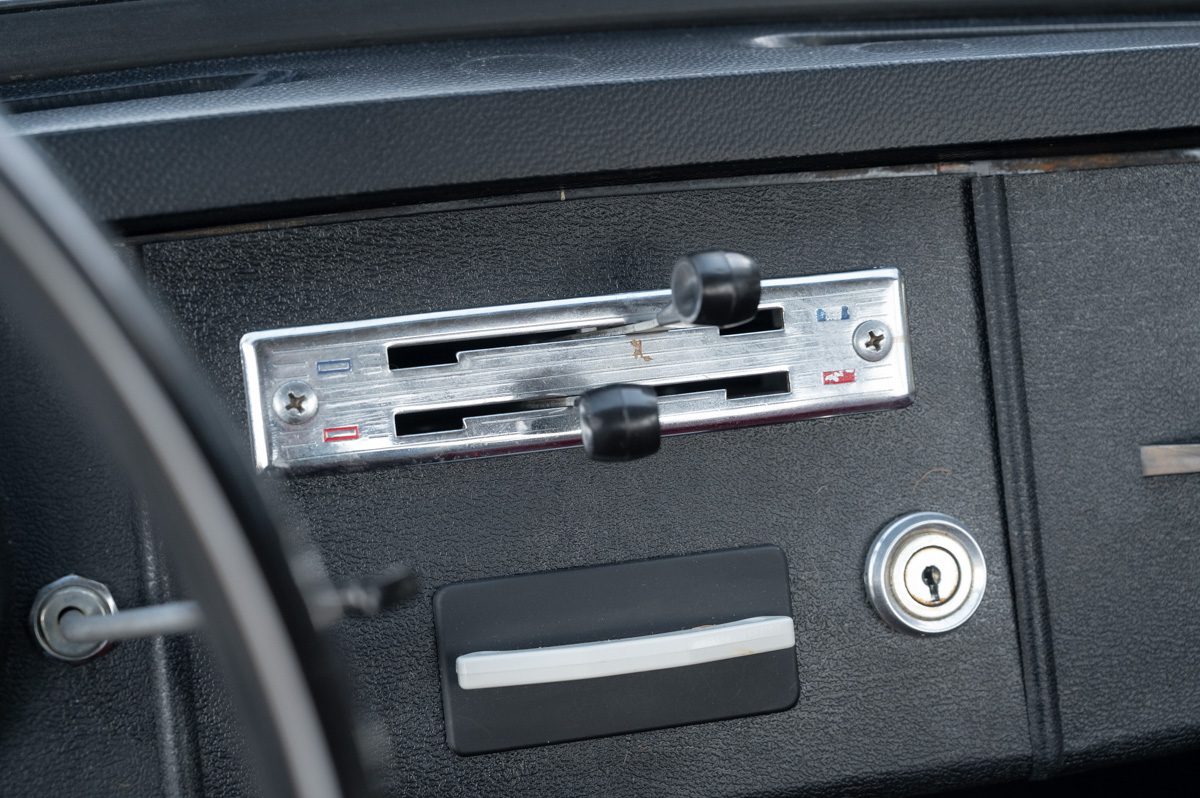
A DAF was friendly, easy to see out of, simple to operate and, thanks to the Variomatic, you did not even have to change gear. That last point was far from a given in the 1960s. And we can hardly leave out the famous Dutch nickname: "little old ladies' shaker with suspender-belt drive.
And that Variomatic, well, as Dutch people we are entitled to a little pride. Dr. Hub van Doorne had devised a transmission that worked entirely steplessly using two rubber V-belts and variable pulleys. No conventional gearbox, no clutch to operate and no gearchanges. Just pick your direction, put your foot down and go. A piece of engineering wizardry viewed at first with a good deal of suspicion by some, but whose basic principle would ultimately be echoed the world over in modern CVT transmissions. Not bad for an invention from Eindhoven.
An added bonus was that, thanks to that unusual drivetrain, a DAF could in theory go just as fast in reverse as it could forwards. That did not go unnoticed, of course, and later gave rise to the famous reverse-gear races, in which grown men tore around circuits backwards with utter disregard for life and limb. The sort of distinctly Dutch madness that nowadays would probably require three permits, a safety coordinator and a full written protocol.
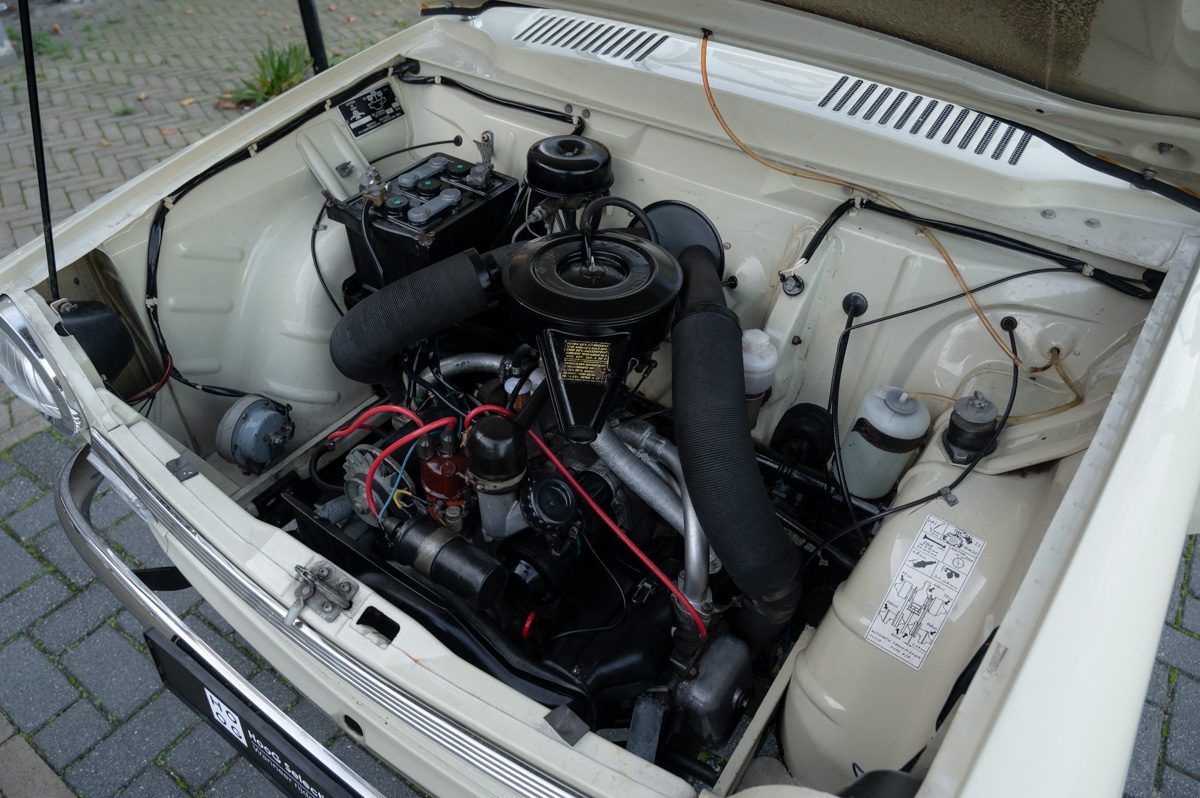
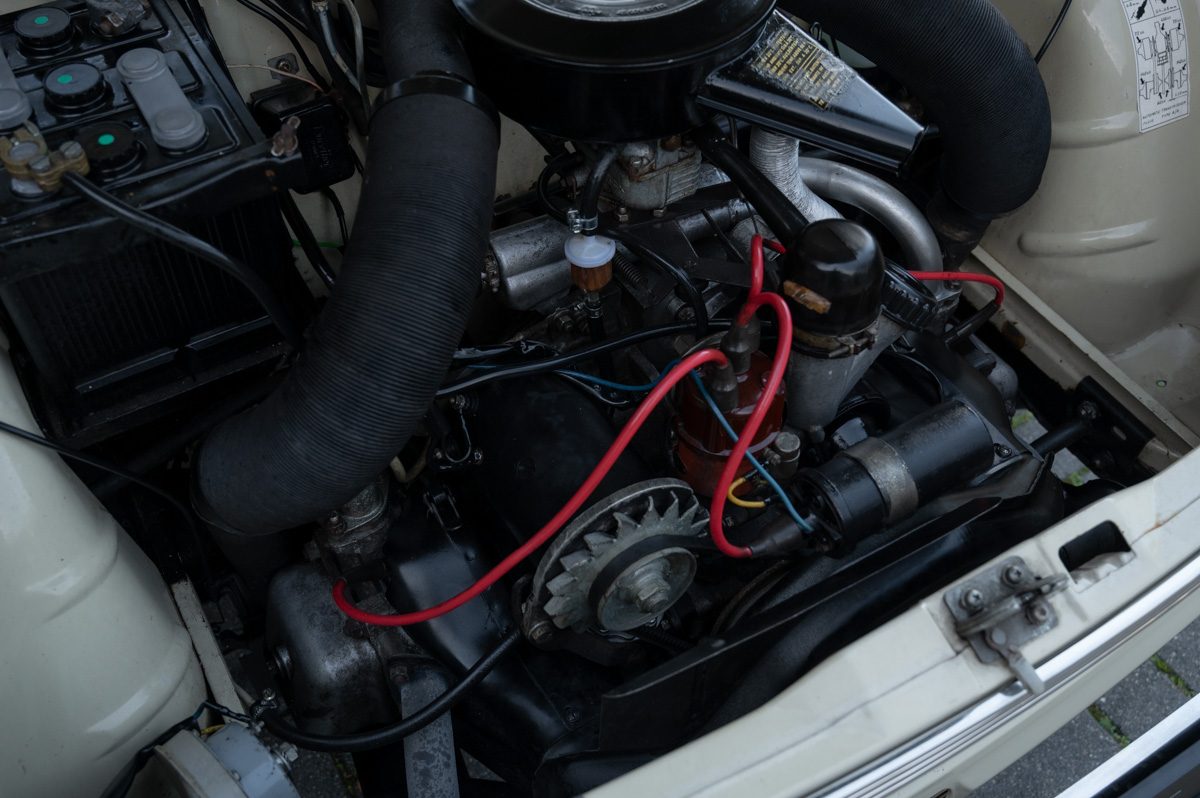
Under the bonnet of the Daffodil sat an air-cooled two-cylinder boxer engine of 746 cc, good for around 30 bhp. These days a half-decent electric bicycle offers almost more of a thrill, but in 1965 that was more than enough for the daily run. The DAF got you where you needed to be and did so without any fuss. With the characteristic sound of the twin-cylinder in the background and the Variomatic quietly getting on with its job, you had all the time in the world to take in the Dutch landscape.
And back then that landscape was not yet flashing past you at 130 kilometres an hour.
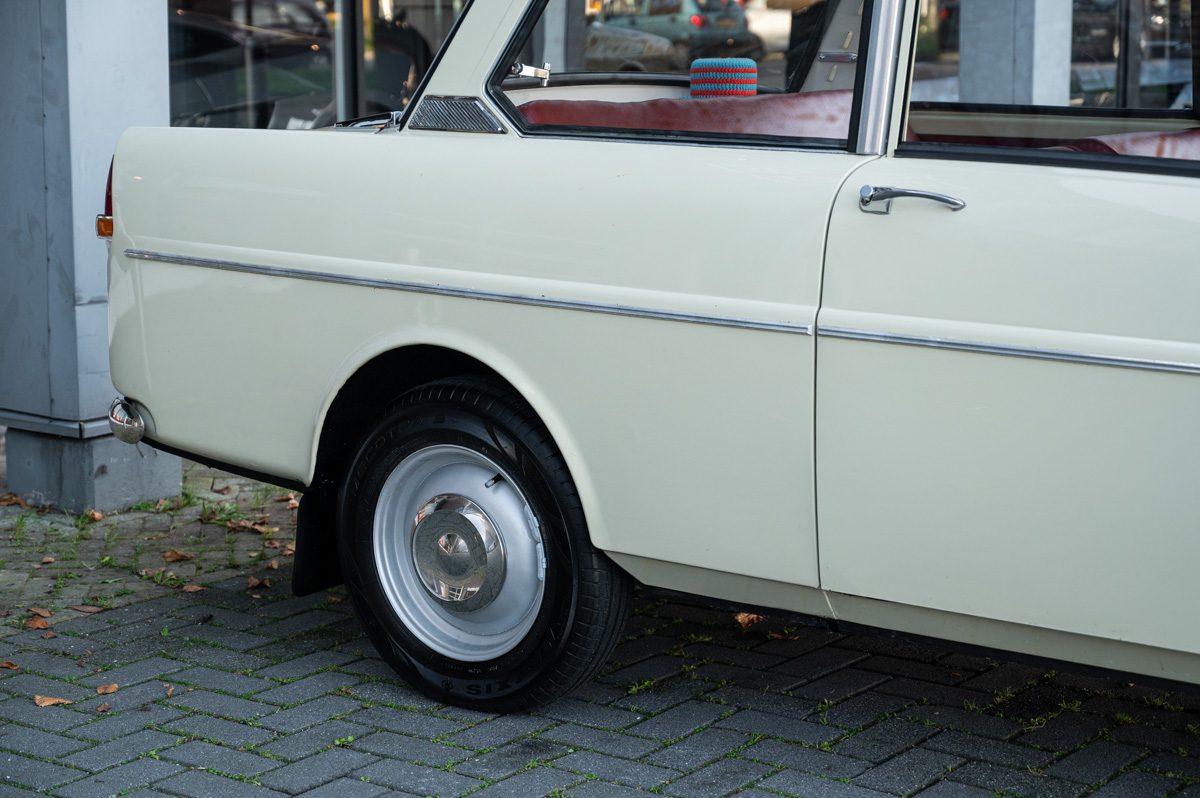
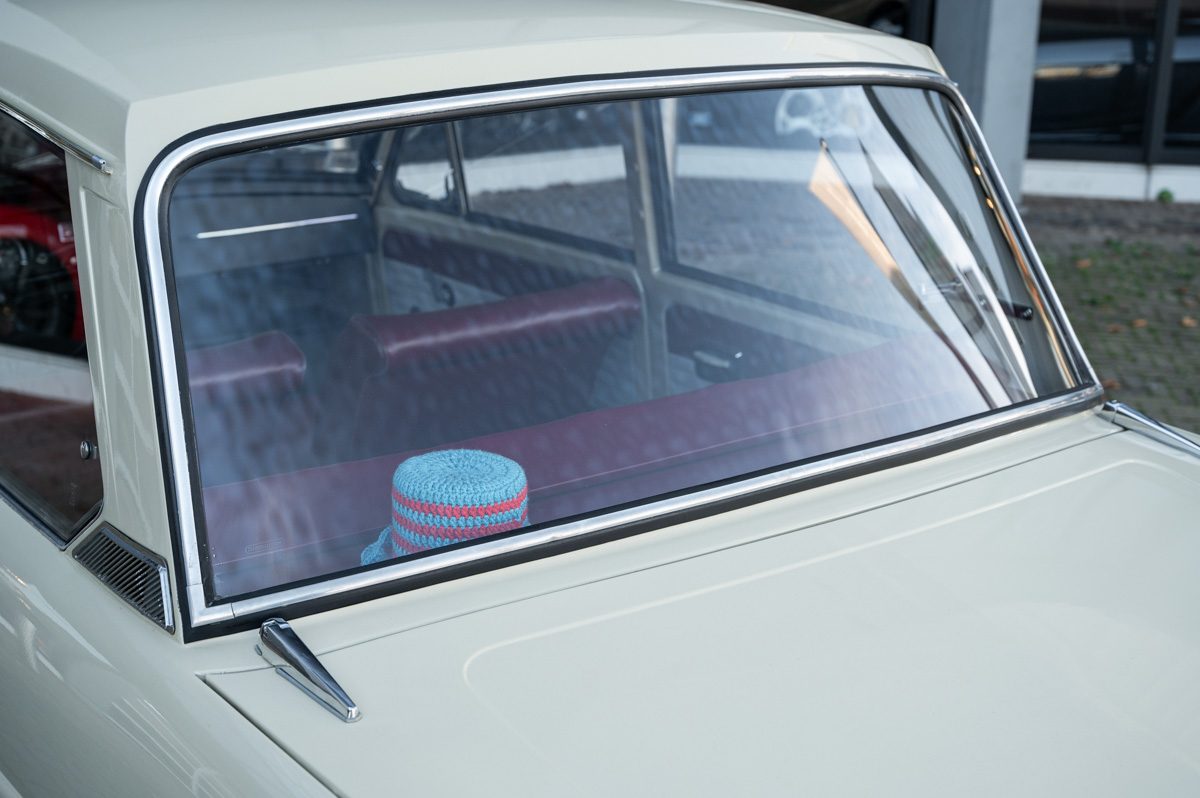
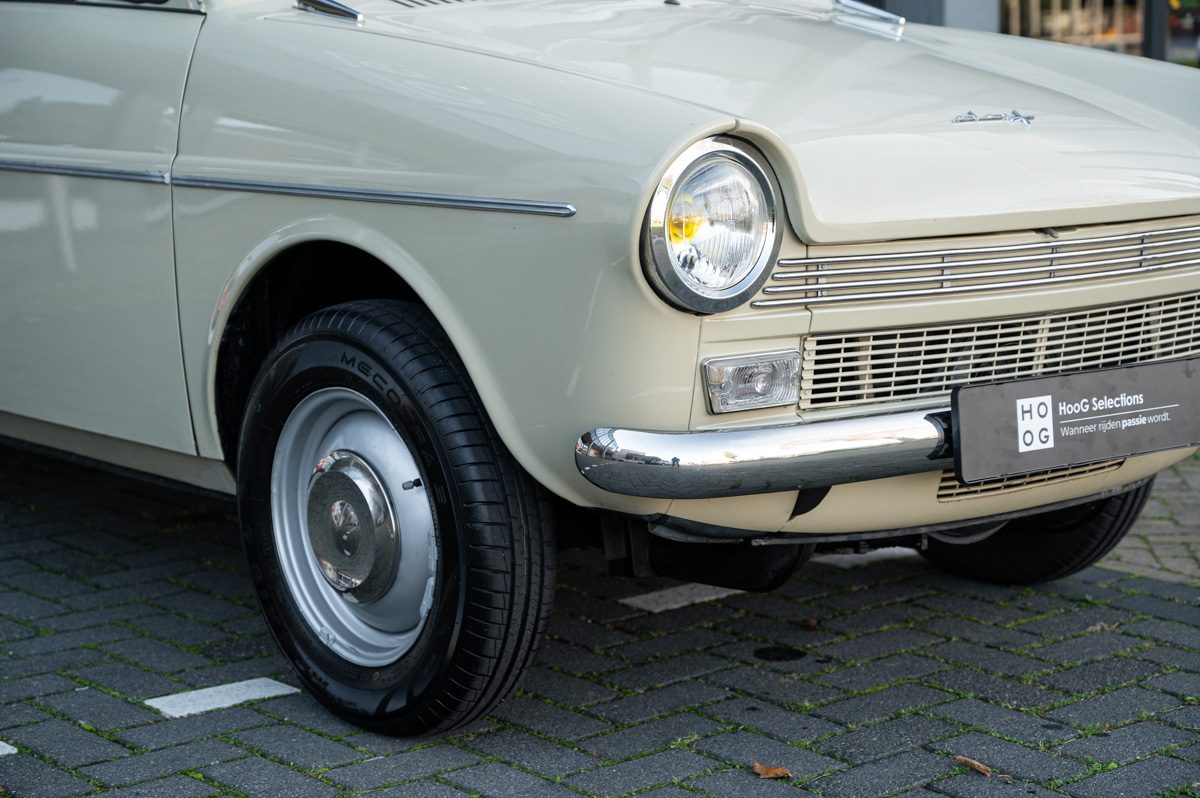
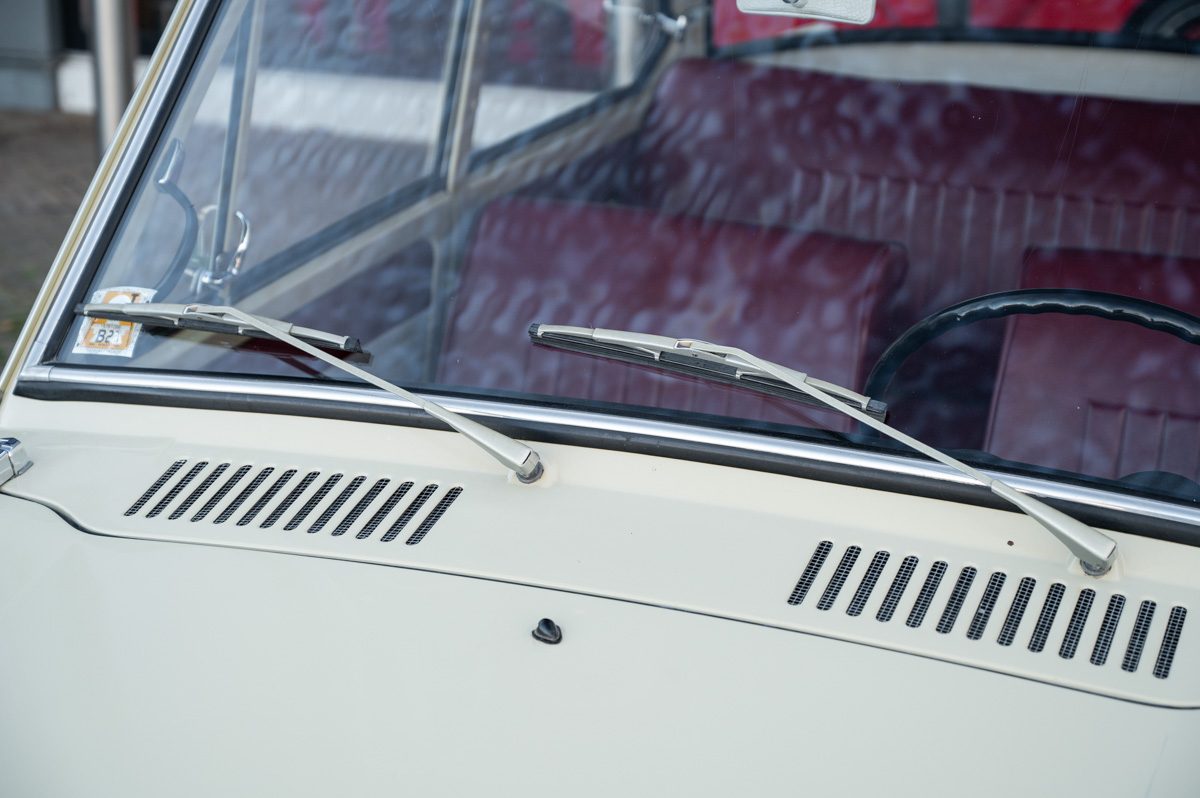
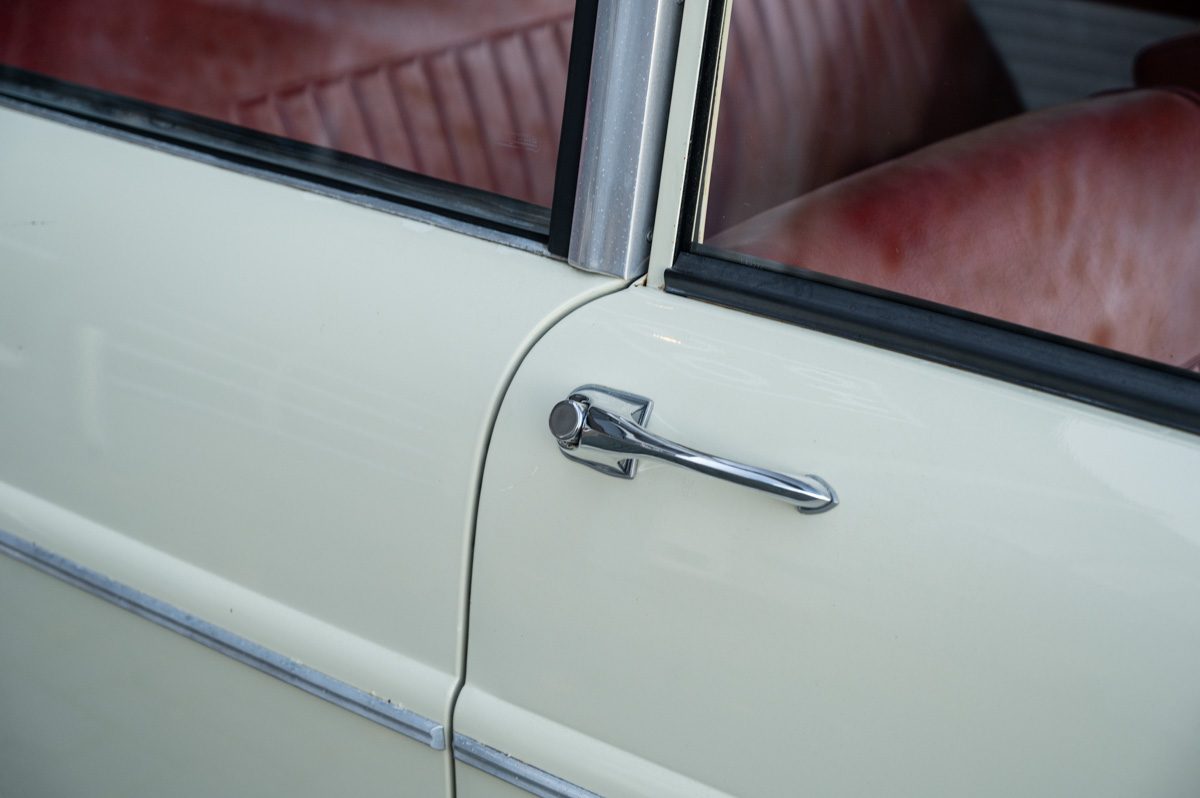
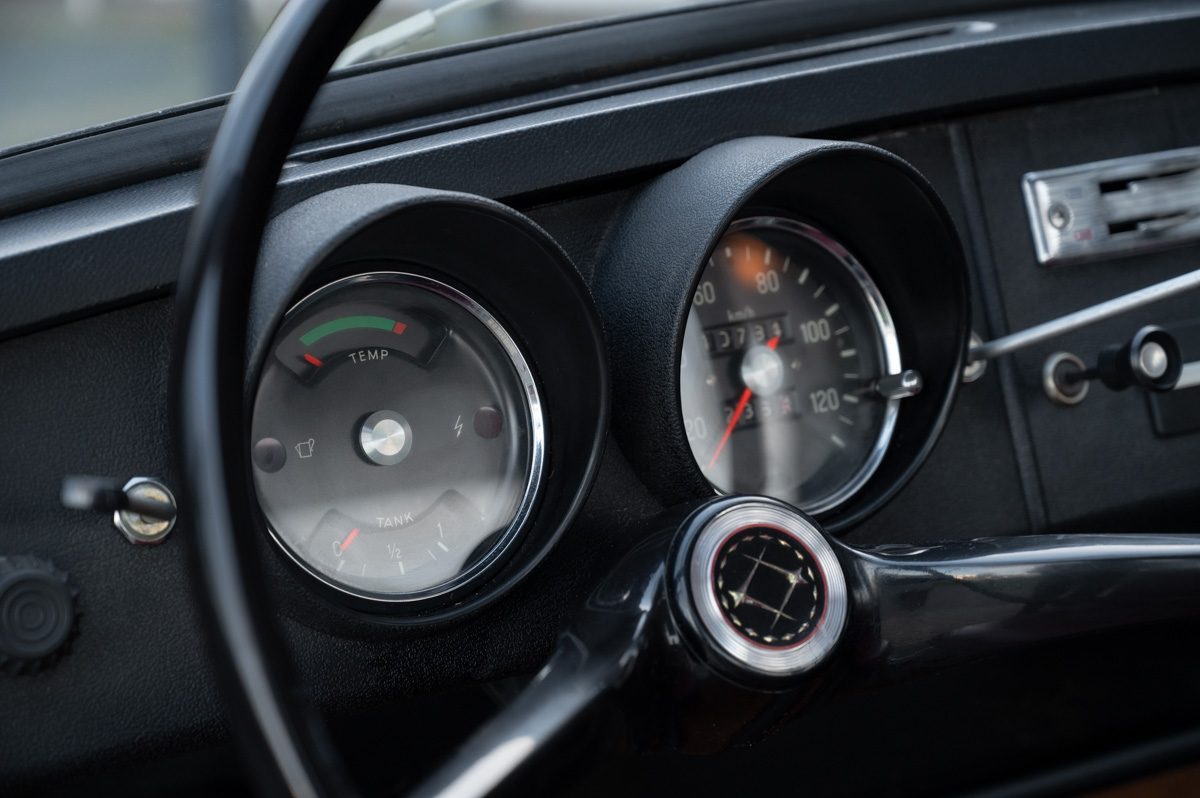
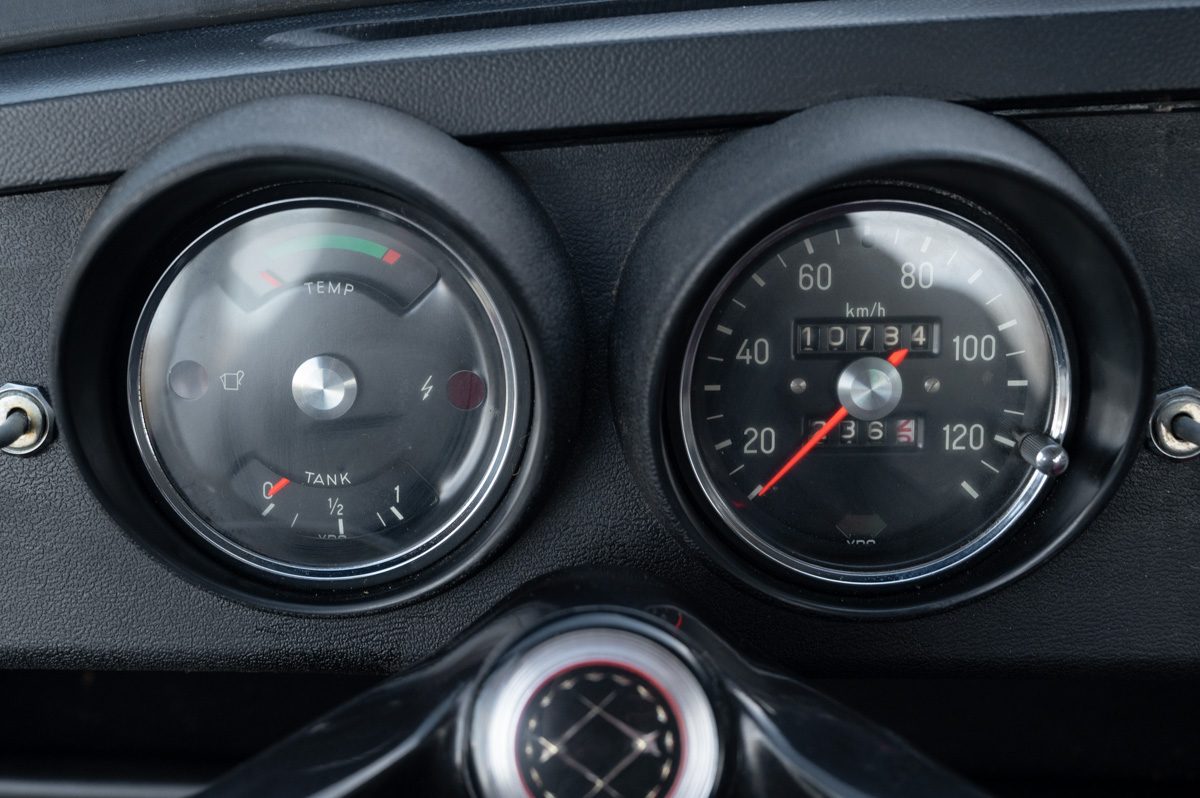
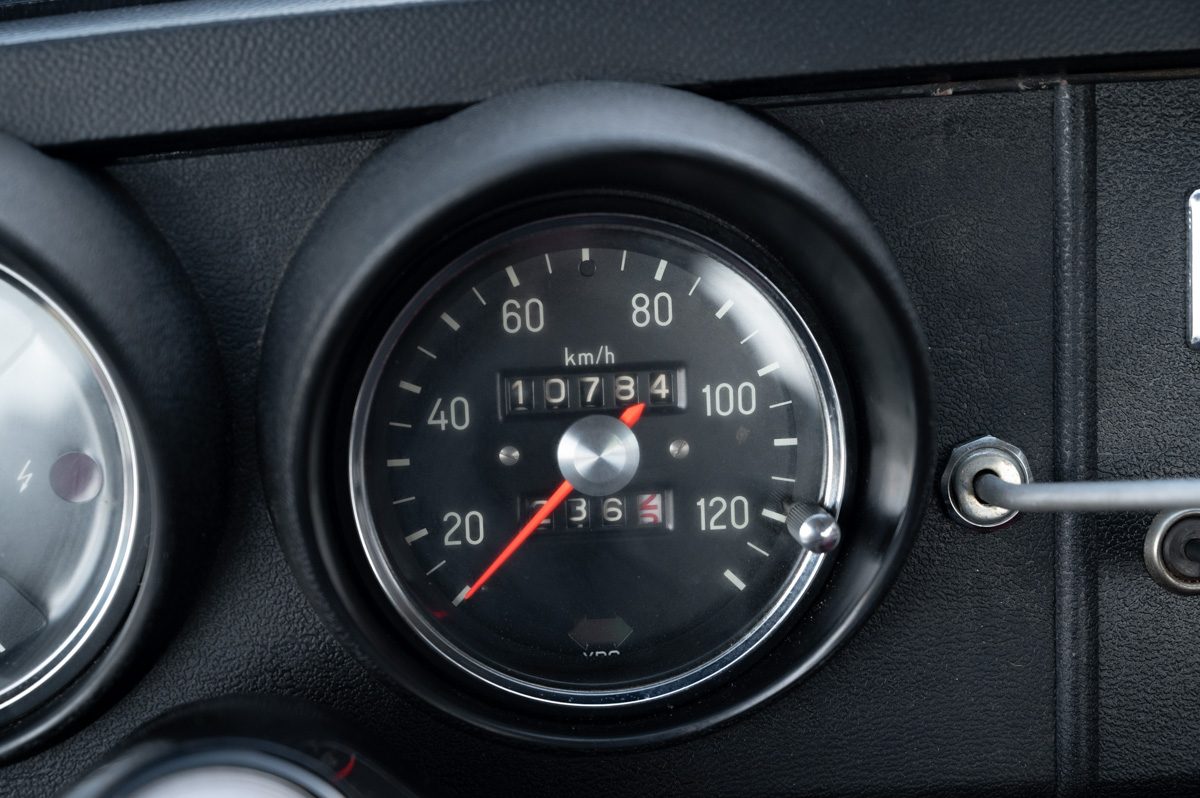
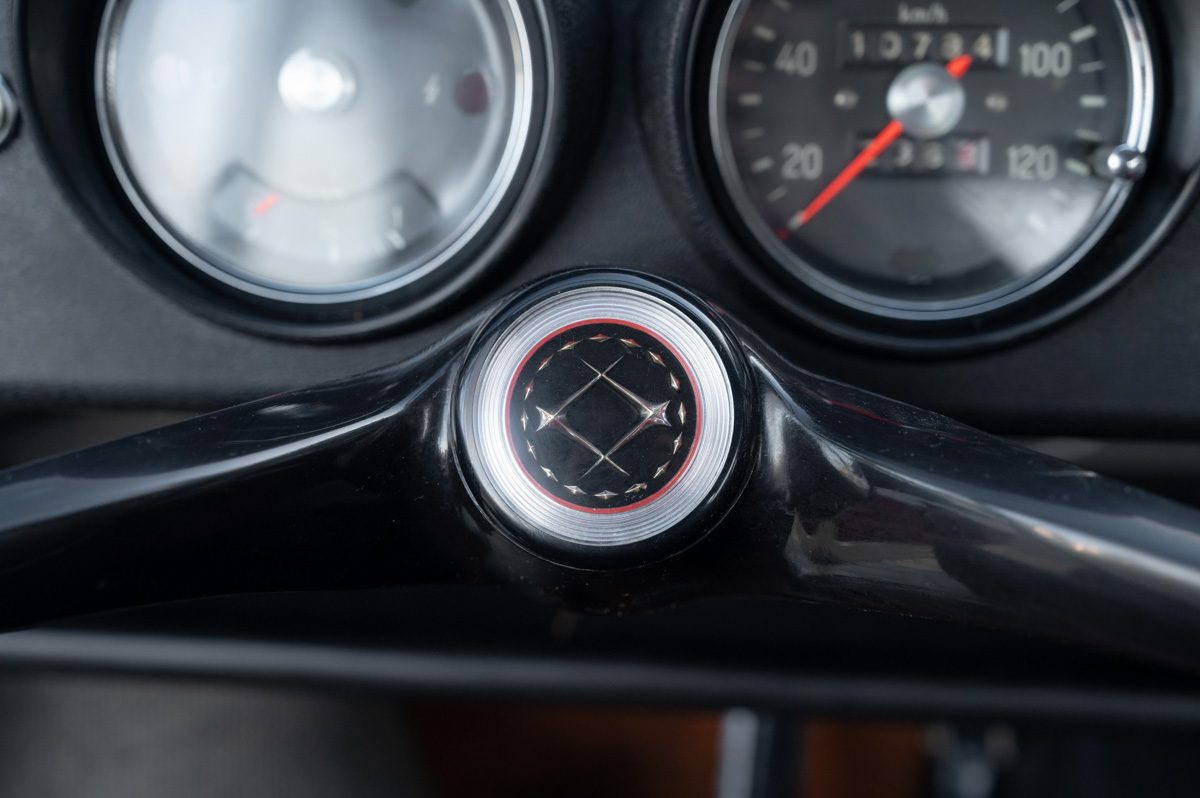
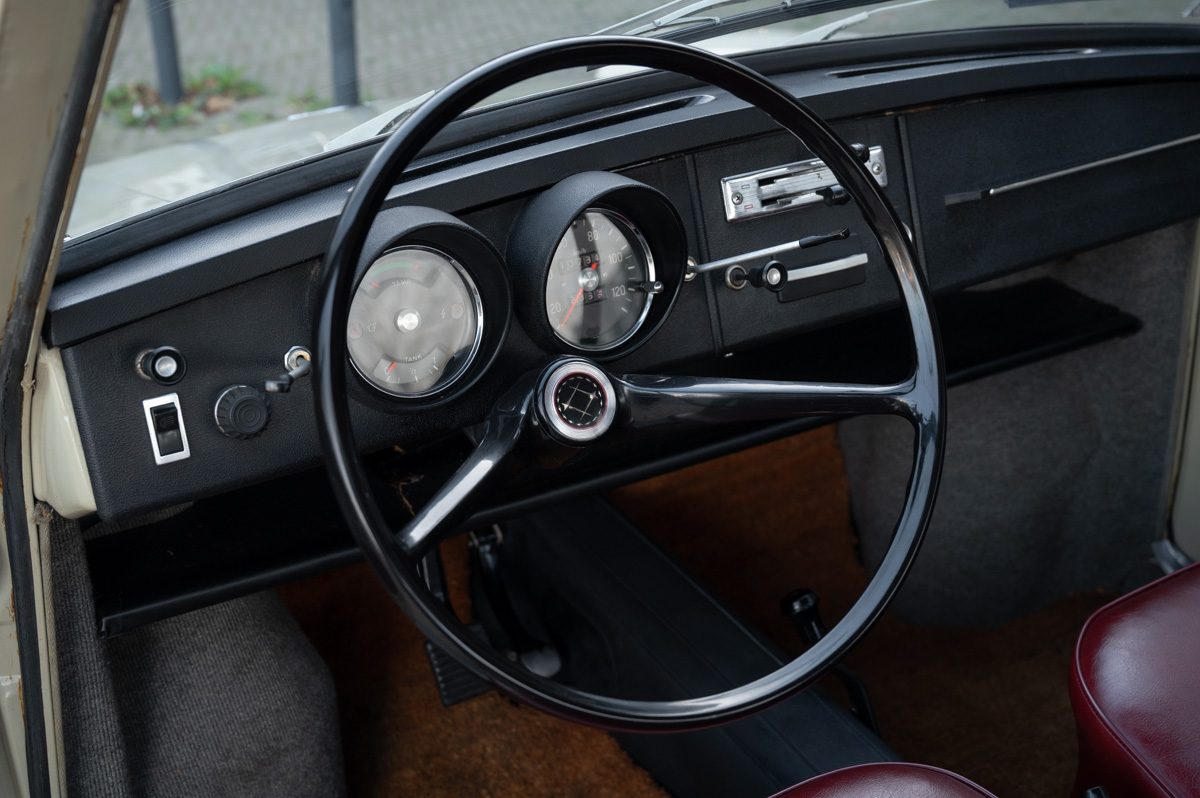
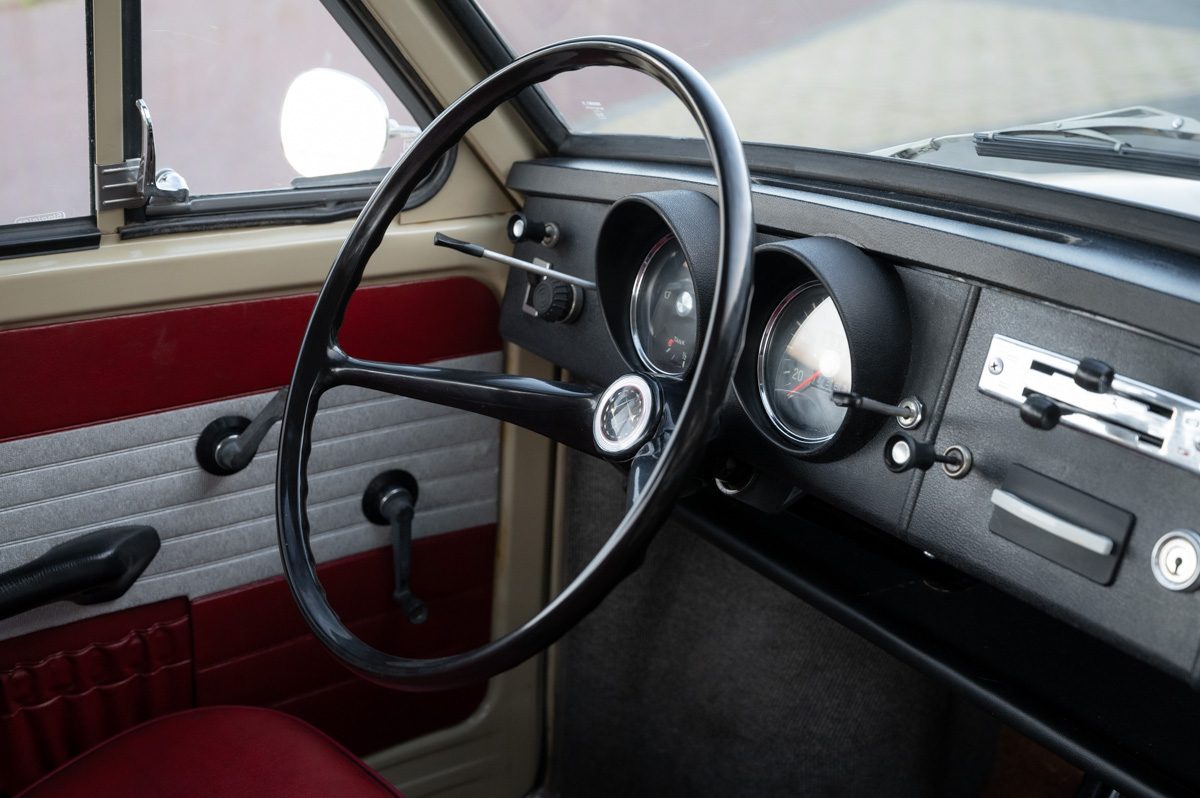
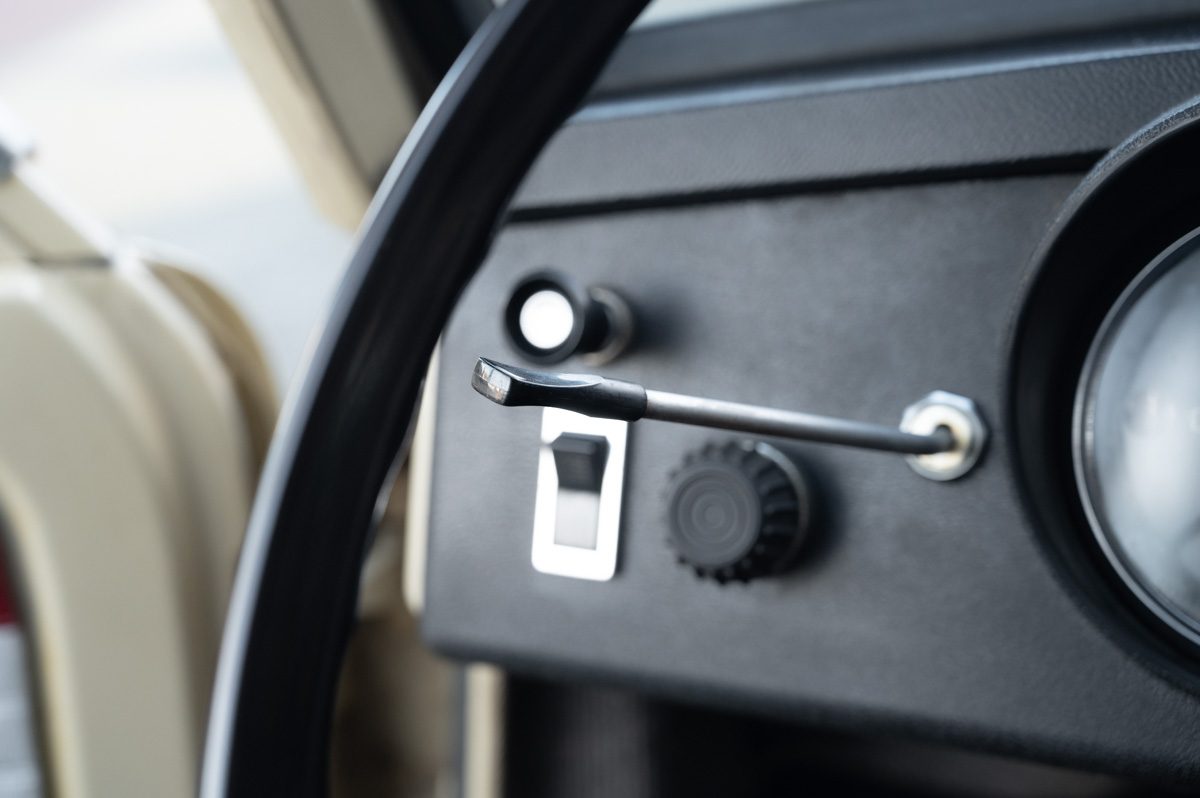
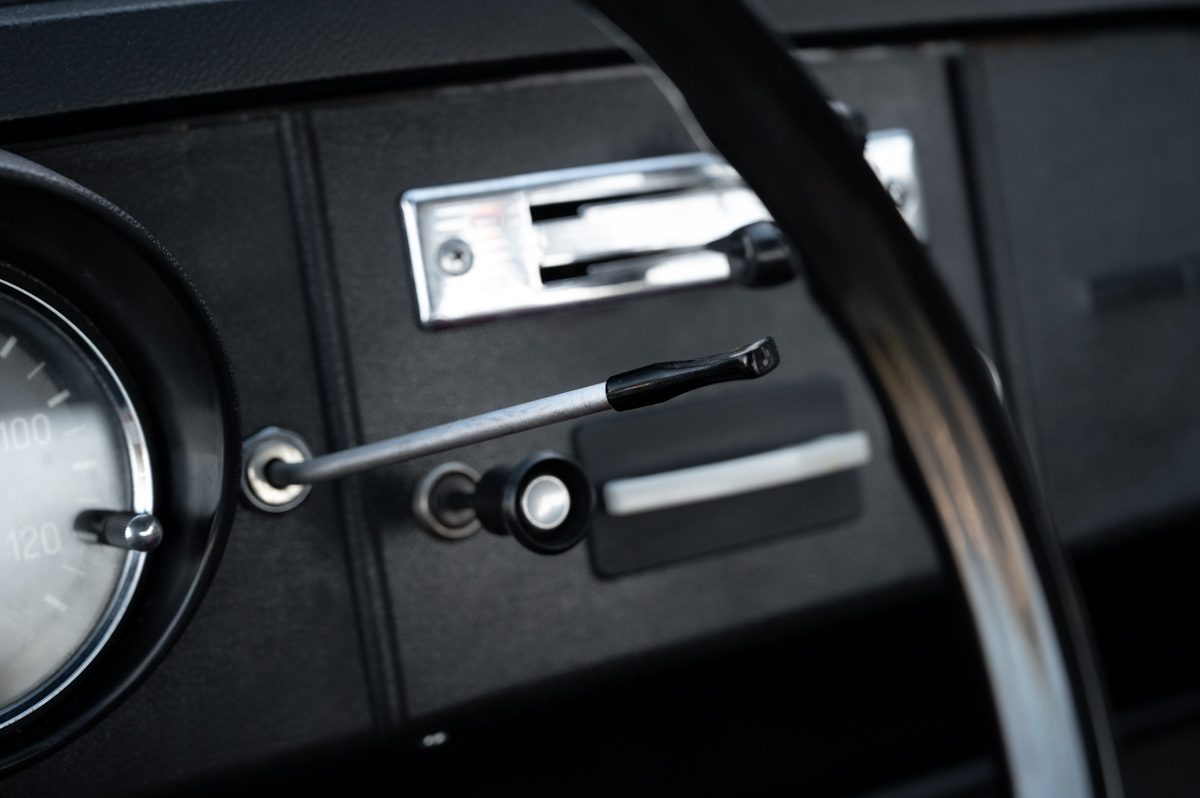
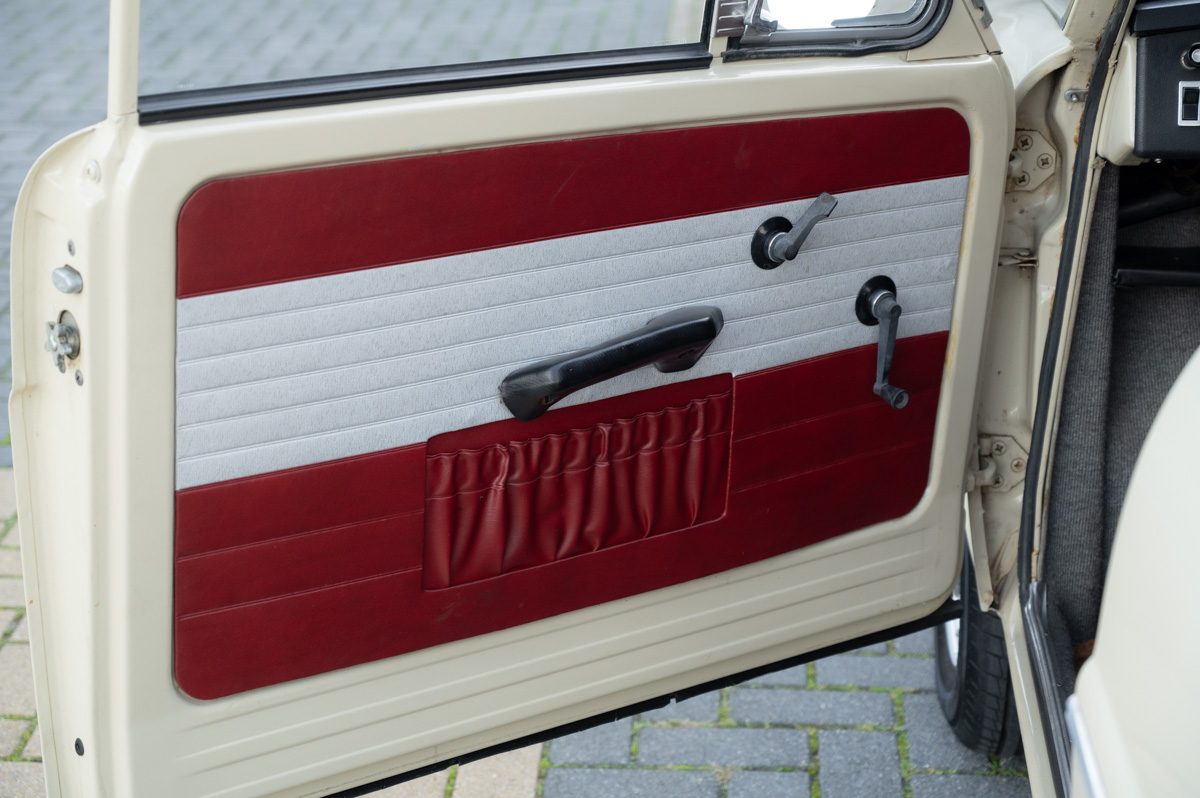
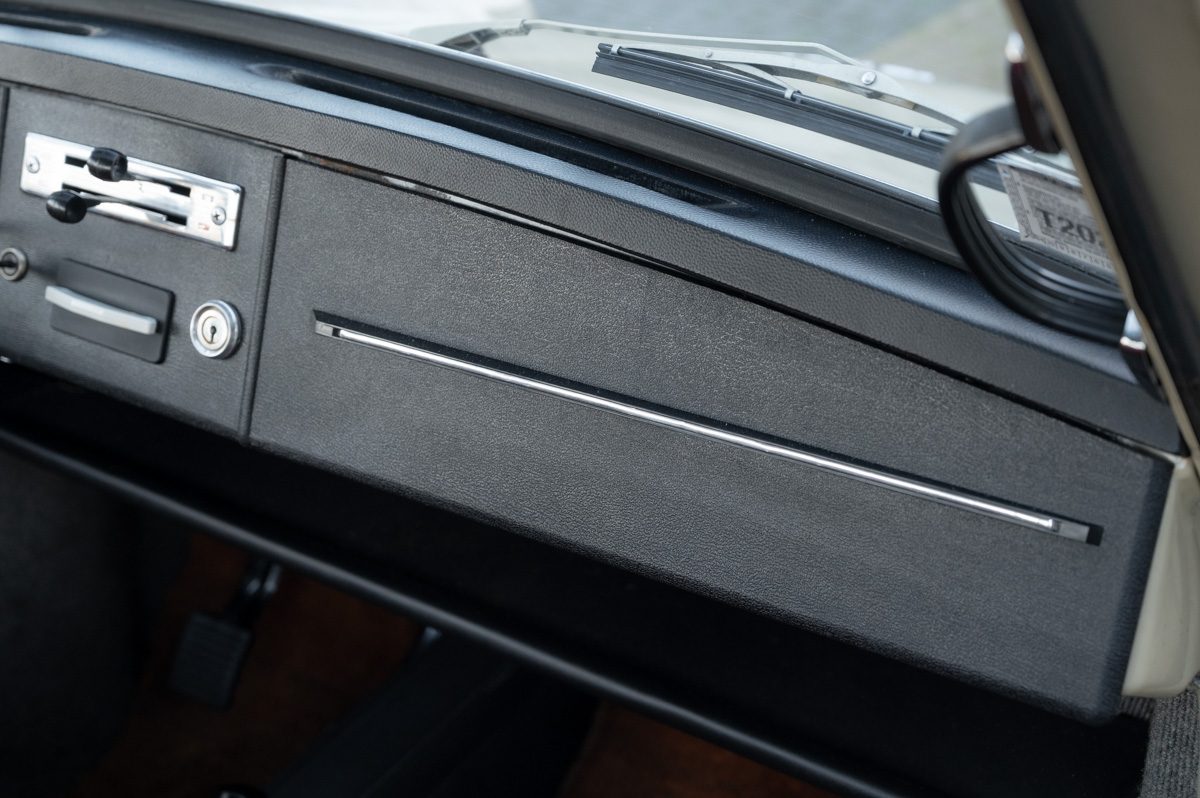
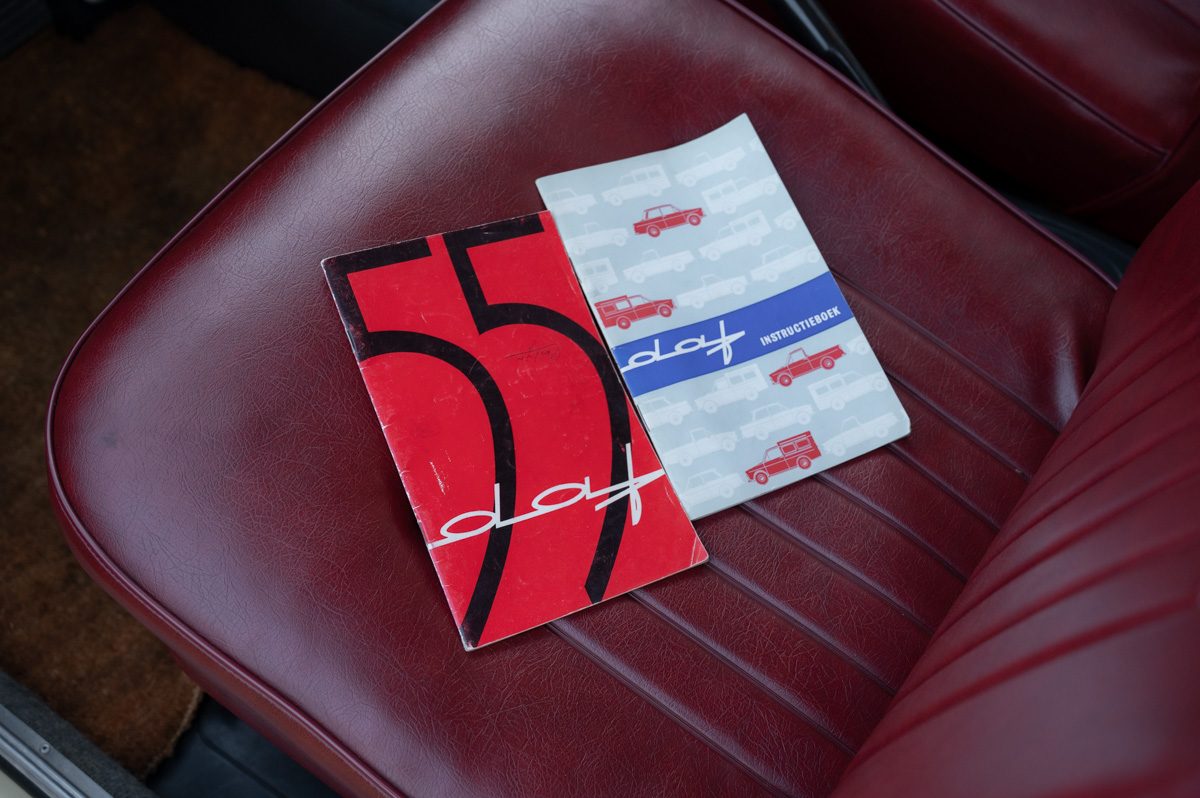
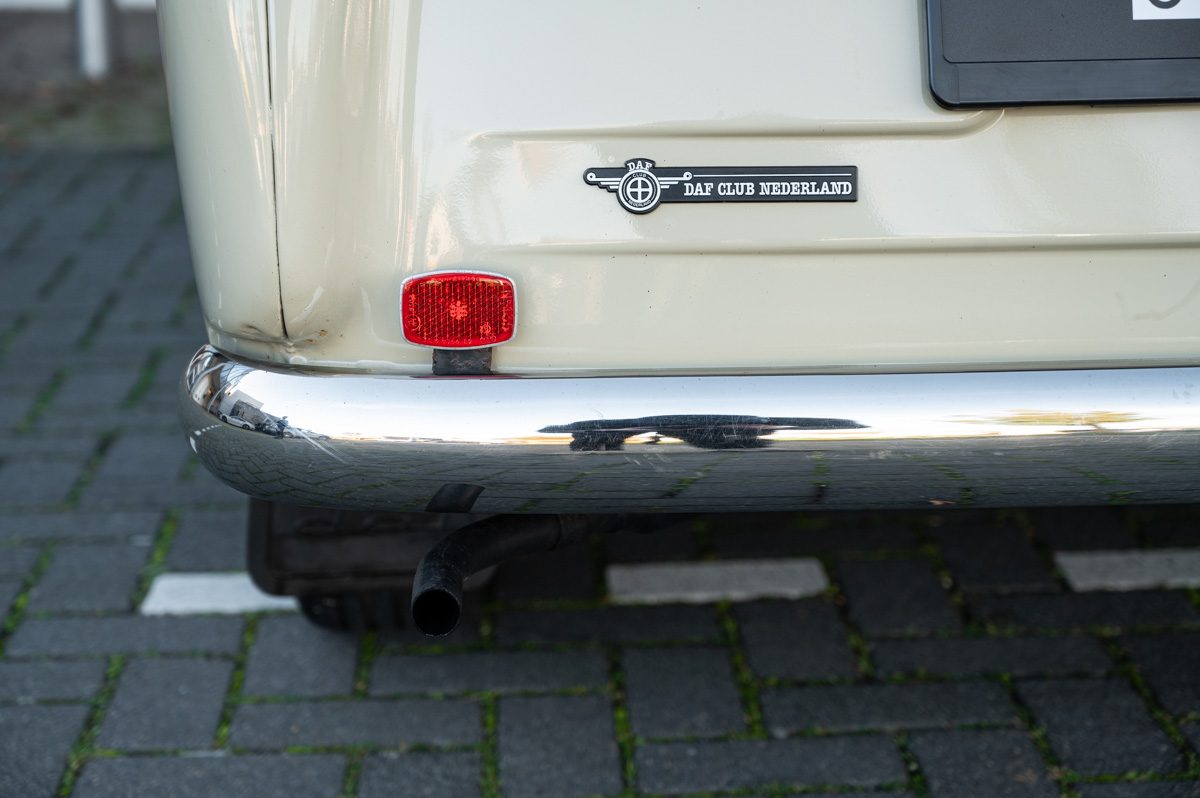
Which brings us to this DAF Daffodil de Luxe from 1965, a remarkably well-preserved example that stands out above all for its originality and history. The car has never been restored and remains in its original, very well-kept condition. The brown bodywork, the red interior and the distinctive details of the de Luxe trim together make for a wonderful snapshot in time. Even the crocheted toilet-roll holder, so popular back in the day, still sits on the rear parcel shelf.
Its history is clear-cut too. The Daffodil was originally delivered in the Netherlands and has never left the country. The first owner kept the car for a full 32 years, after which it changed hands a few more times. A long Dutch history that sits well with the character of this unrestored DAF.
And perhaps that is the greatest charm of a Daffodil. Park it among a row of Ferraris, Porsches and Mercedes at a classic-car event and the odds are that at least as many people will linger around this little Dutchman. Not for its performance or its value, but because almost everyone has a memory tied to it. Dad's first car, grandma's DAF or that one holiday when the whole family, luggage and all, was crammed into such a tiny motor.
You do not buy a DAF because you are in a hurry or out to impress. You buy it for its remarkable engineering, its disarming simplicity and the slice of Dutch history it represents. And it is precisely an unrestored example like this Daffodil that still shows what that really looked like at the time.
Italy can keep its Fiat 500, Britain its Mini and Germany its Beetle. We had the Daffodil. And that is something to be proud of.
Special features:
- Legendary Variomatic, the stepless automatic from Eindhoven
- Tidy De Luxe trim from 1965
- Two-cylinder petrol engine of 746 cc
- Two-door saloon with cloth upholstery, five seats
- Stayed in the Netherlands its entire life, no import history
- First owner kept it for thirty-two years
- A rare piece of Dutch automotive heritage
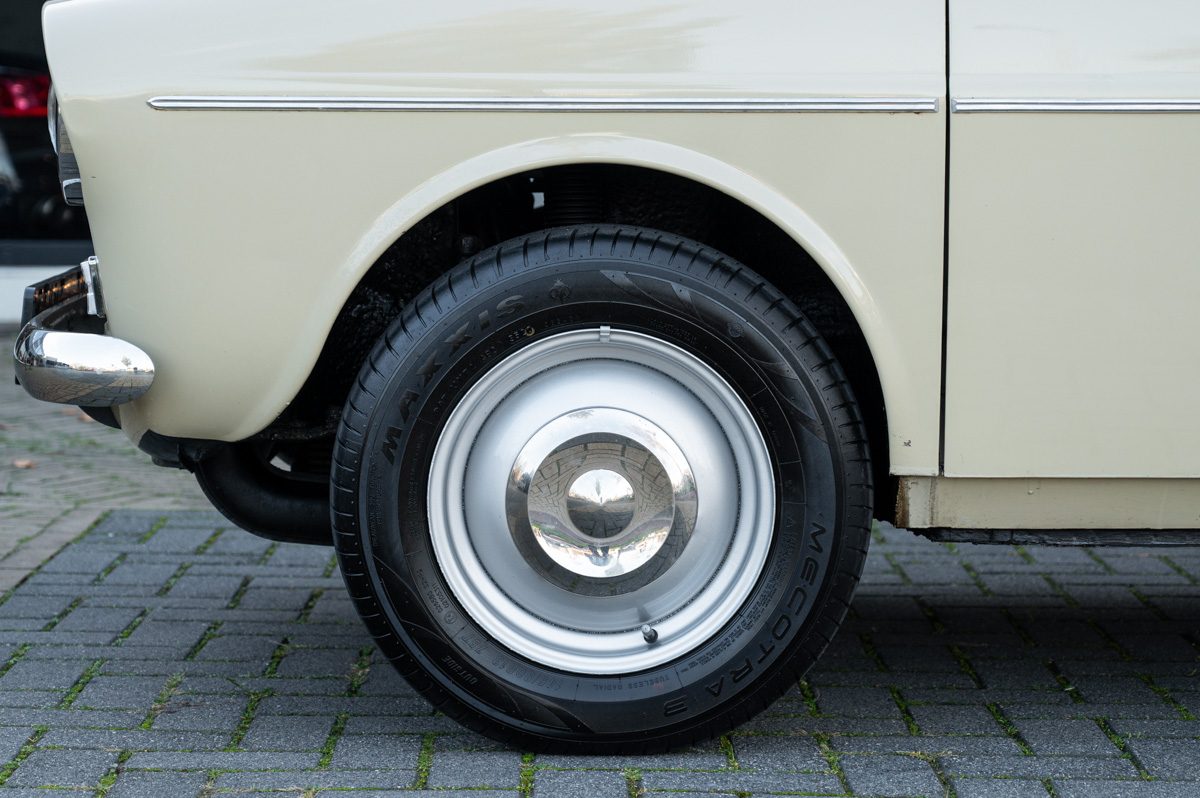
- Four Axis summer tyres with plenty of tread
- Huge feel-good factor at any classic-car gathering


Full insight into the papers our assessment is built on. Carfax vehicle history, service documentation and paint thickness report — page by page.
Browse by swiping, the arrow buttons or the arrow keys. Home and End go to the first and last page. Double-tap or pinch to zoom. Escape closes.